A new military arm in a year of crisis
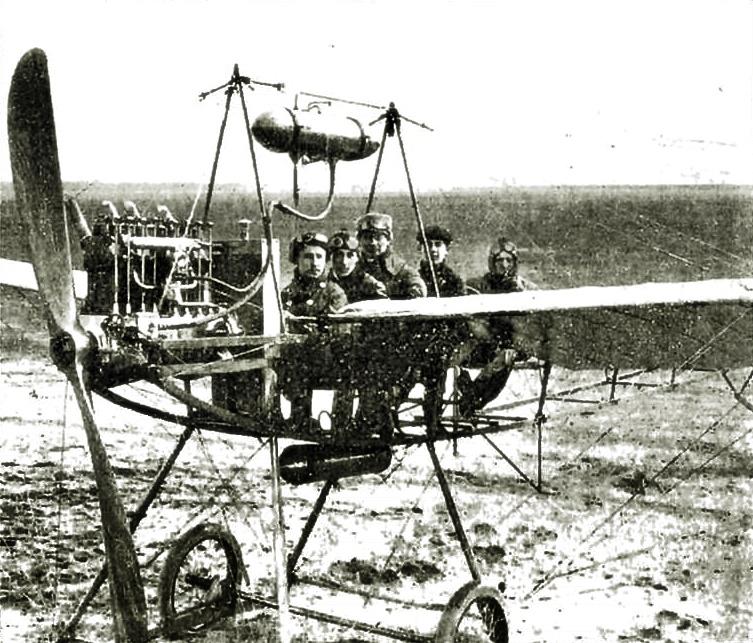
When the Ottoman army entered the Balkan War in the autumn of 1912, military aviation was still a fragile undertaking. Buying an aeroplane was only one part of the task. Aircraft required trained pilots, mechanics, suitable landing grounds, shelter, fuel, spare parts and arrangements for moving them with the army. The facilities being developed at Yeşilköy were a beginning rather than a mature operational system. Among the different aircraft types acquired during this formative period was the German Harlan Eindecker. [R1][R2]
The type is important less for a record of successful sorties than for the predicament it reveals. Two aircraft were purchased for reconnaissance, with an additional ability to release bombs. Yet their brief Ottoman career ended during the rapid reversals of the First Balkan War. Their story is therefore also a story about the practical limits of early military aviation. [R1][R3]
A German monoplane from the pioneer era
Eindecker is German for a single-wing aeroplane or monoplane. It describes the wing arrangement rather than a unique numerical variant. The Harlan Eindecker of 1912 should not be confused with the considerably later Fokker Eindecker fighters of the First World War. The design belonged to the early German monoplane movement associated with aviation entrepreneur and engineer Carl Wolfgang Harlan. Contemporary reports document Harlan monoplanes competing in German flight events during 1912. [R4][R5]
The specification associated with Ottoman service describes a two-seat reconnaissance aircraft powered by one 100 hp Argus engine, with a wingspan of 13.80 m, length of 9.10 m and maximum speed of about 110 km/h. These values belong to the type as recorded in the Turkish Air Force aircraft album; they should not be applied indiscriminately to every civilian or record-setting Harlan configuration. [R1]
For all its apparent simplicity, an early monoplane presented exacting maintenance demands. Exposed airframes, basic airfield facilities and dependence on specialised personnel meant that mechanical condition and logistical support were just as important as aerodynamic performance. The coming campaign would make these constraints especially evident. [R2]
The Ottoman purchase of two aircraft
During 1912, the Ottoman War Ministry investigated European aircraft and the means of developing a military flying service. One of the figures involved in these initiatives was Lieutenant Colonel Süreyya (İlmen) Bey, who led a procurement and inspection mission in Europe. Two Harlan Eindecker aircraft were purchased, and the Turkish Air Force aircraft album records their arrival in Istanbul in August 1912. [R1][R2]
The ability to drop bombs helped distinguish the Harlan from an aircraft considered solely for observation. A secondary account gives the value of the order as 60,000 German marks, and also lists possible bomb weights. Those figures should be understood as reported procurement and carrying-capability details, not as proof that a particular combat mission was flown with a standard load. What the purchase does show is that the Ottoman military was already evaluating the aeroplane as both an intelligence-gathering and a potential offensive weapon. [R1][R3]
The Harlan was not purchased in isolation. Deperdussin, R.E.P., Blériot and Bristol aircraft also entered the expanding Ottoman inventory around this time. This varied fleet offered opportunities to test different solutions, but every new engine and airframe type also increased the challenge of training and maintaining a small, rapidly assembled service. [R1][R2]
Kırklareli and the First Balkan War
The First Balkan War began in October 1912, before the Ottoman flying service had established a dependable front-line support structure. An academic study identifies a detachment of two Harlan aircraft assigned to the Ottoman Eastern Army, under Cemal Bey, and names the German pilots Reinhold Jahnhow and Adolf Rentzel among the personnel associated with the unit. These arrangements show the degree to which the new service still depended on outside expertise. [R2]
The two Harlans were sent to the Kırklareli area. During the army’s retreat towards Pınarhisar, the machines could not be successfully evacuated. The Turkish Air Force album states that they had not flown for some time, had suffered from exposure to the elements and were left behind at Kırklareli. Their Ottoman service thus ended during the campaign of 1912. [R1]
Accounts differ on exactly what happened next. Some say that the aircraft were set alight or damaged during the retreat and then captured by Bulgarian forces; one is reported to have been repaired and flown by the Bulgarians. These details are compatible with aircraft being abandoned in damaged condition, but the reported Bulgarian flight has not been independently verified here against a contemporary operational record. It is best treated as an attributed account rather than an established mission history. [R1][R3]
Intended capability versus documented operations
The Harlans were acquired as reconnaissance machines with a bomb-carrying capability. Nevertheless, the accessible sources do not provide a sufficiently detailed record of successful combat sorties by these particular two Ottoman aircraft. Other Ottoman aircraft carried out reconnaissance during the Balkan campaigns, but those missions must not automatically be assigned to the Harlan type. No unsupported bombing or aerial victory claims are made here. [R1][R2]
This distinction between an aircraft’s intended role and what it achieved matters. Military usefulness depended on more than nominal speed, range or payload. Aircraft required suitable ground support and had to remain serviceable as an army moved. The loss of the two Harlans demonstrates how difficult it was to employ an embryonic flying force in a rapidly changing land campaign. [R2]
A short-lived aircraft with a lasting lesson
The Ottoman service of the Harlan Eindecker is best placed in 1912: two machines were delivered, deployed and lost during that year’s campaign. In contrast with later reconnaissance and fighter types, the Harlan did not enjoy a long operational career or a large Ottoman fleet. [R1]
Its value in an aviation archive lies elsewhere. It shows the difference between purchasing aircraft and establishing a sustainable military air capability. Early Ottoman aviators and commanders were learning about the demands of pilot training, mechanical support, operational planning and airfield infrastructure under the pressure of war. The Harlan Eindecker belongs to that difficult first chapter of Ottoman military aviation. [R1][R2]