A fighter that kept changing
When the Messerschmitt Bf 109 first flew in 1935, it represented the new generation of fast, low-wing monoplane fighters. It would still be serving in front-line units a decade later, but it did not remain the same aircraft. New engines, more powerful weapons and increasingly demanding combat roles transformed the design through the Emil (E), Friedrich (F) and Gustav (G) series.
With more than 33,000 aircraft built across the family, the Bf 109 became one of the most widely produced fighters of the Second World War. The G-6 was among its most numerous individual variants and an everyday aircraft for many Luftwaffe units from 1943. Its importance lies not just in production totals, but in the compromises required to adapt an ageing airframe to a changing air war. [1][2]
The DB 605 and the Gustav’s changing shape
The Gustav series developed around the liquid-cooled, inverted-V Daimler-Benz DB 605 engine. The DB 605A produced approximately 1,475 PS, helping the fighter retain useful performance even as equipment and combat demands increased. Additional weapons and external stores, however, brought added weight and drag. Improvements in one area could impose a penalty elsewhere. [2][3]
The G-6 entered service in early 1943. Its two engine-mounted 13 mm MG 131 machine guns replaced the earlier 7.92 mm MG 17 weapons used on some preceding variants. Their larger breeches required the conspicuous bulges on either side of the cowling. These Beule—the German word for bulges—became one of the clearest visual identifiers of the G-6. [1][2][3]
A typical G-6 also carried a 20 mm MG 151/20 cannon firing through the propeller hub. Yet not every G-6 had identical armament. In the G-6/U4, for example, a 30 mm MK 108 cannon replaced the engine-mounted 20 mm weapon. Identifying a particular aircraft therefore requires more than reading the variant designation alone. [2][3]
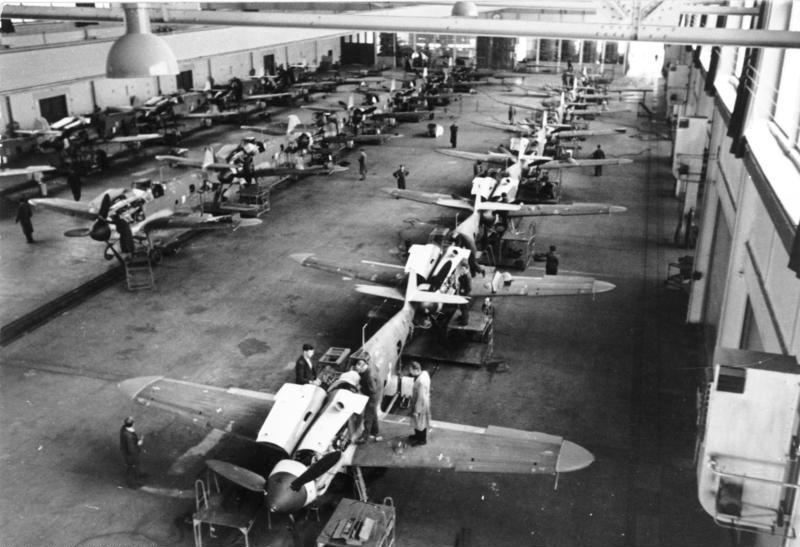
One airframe, different missions
Combat units needed fighters for more than one task. A 300-litre drop tank extended range; certain aircraft carried bombs, while others used a 20 mm MG 151/20 cannon gondola beneath each wing to increase firepower against heavy bombers. Factory conversion packages and field-mounted Rüstsätze offered flexibility, but the additional equipment made the aircraft heavier and more resistant to the controls. [2][3]
The G-6 designation also covered aircraft built at different times and with different details. Canopies, tails, antenna arrangements and equipment evolved during production. The improved-visibility Erla canopy, for example, did not appear on every G-6. Photographs should be interpreted with their dates and known airframe identities in mind rather than assuming one fixed configuration. [3]
The Eastern Front and the defence of Germany
On the Eastern Front the G-6 fought in the tactical air war around armies and airfields. In the west its role changed as American daylight bombing operations expanded during 1943. Some G-6s attacked bomber formations with additional cannon or rockets, while others attempted to deal with the fighters screening those formations. The same aircraft type could be assigned very different missions on successive days. [2][3]
The spread of long-range Allied escorts in 1944 made daylight interception more dangerous. In capable hands a G-6 remained a serious fighter, yet the limitations of a design that had first flown before the war were increasingly apparent. Its continued use through 1945 was a testament to sustained production and adaptation, not proof of superiority under every condition. [2][3]
Wilhelm Schilling’s Yellow 1
Our companion scale model depicts “Yellow 1”, associated with Wilhelm Schilling of 9./JG 54 at Ludwigslust in February 1944. Tamiya’s 1/48 kit no. 61117 includes this marking option; specialist references identify the aircraft as Werknummer 440141. [4][5]
Schilling’s service connected the Eastern Front with the defence of Germany. He was wounded during an operation on 20 February 1944, reportedly making a forced landing in Yellow 1. His life and claims deserve their own context: wartime victory claims cannot simply be equated with independently confirmed enemy losses. [4][6]
- Related portrait: Wilhelm Schilling: From the Eastern Front to the Defence of Germany
- Companion build: Tamiya 1/48 Bf 109 G-6 “Yellow 1” — model build
- Related diorama: Final Checks — a separate modelling project.