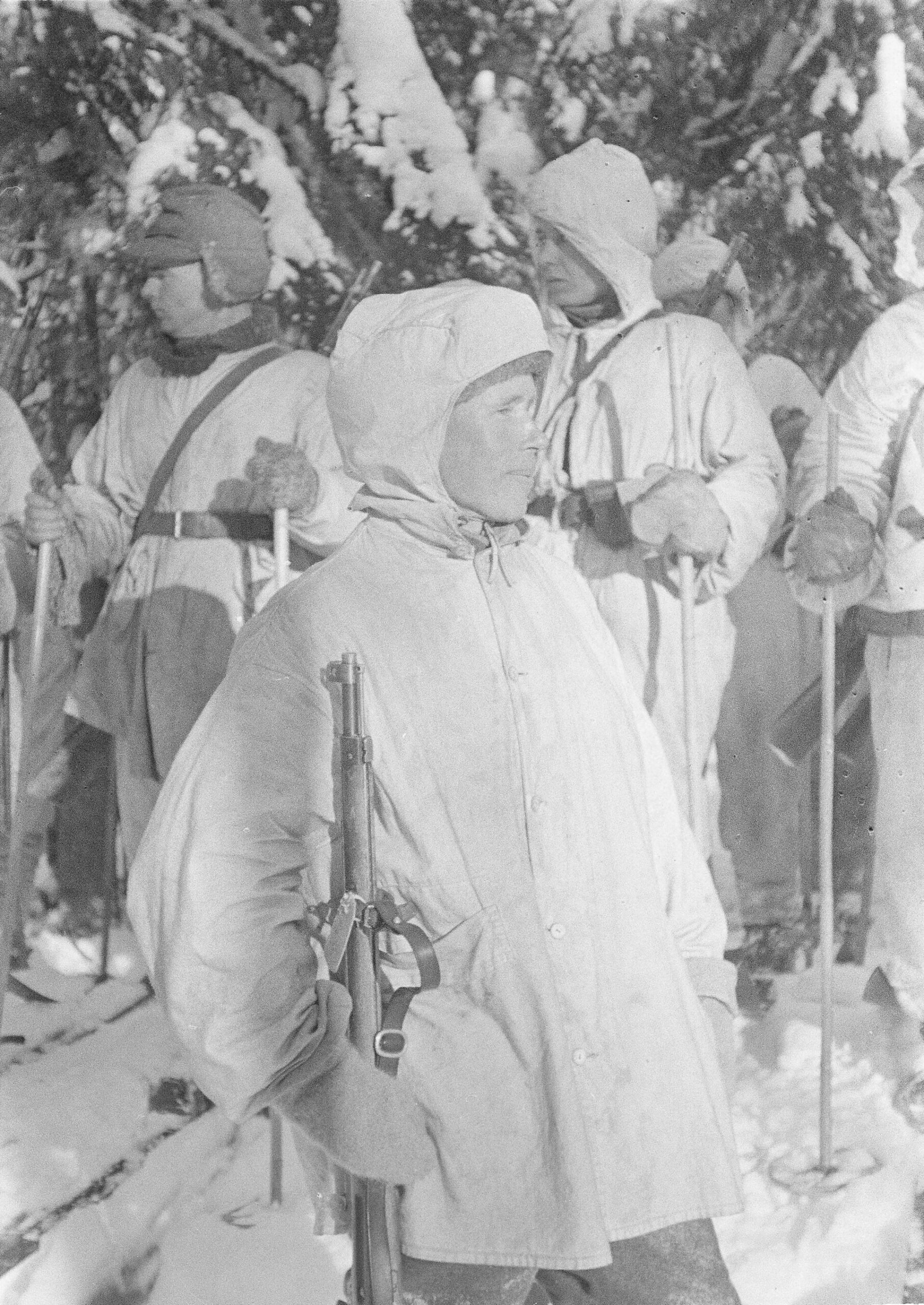
Few names associated with Finland’s Winter War of 1939–40 have travelled as far as Simo Häyhä’s. The soldier who fought on the Kollaa front became internationally famous for his winter camouflage, iron-sighted rifle and remarkable reputation as a marksman. Popular accounts often reduce his life to enormous casualty figures. Yet there is a more revealing story behind those numbers: Häyhä was a farmer, hunter and reservist, severely wounded near the end of the war, who would spend decades trying to lead an ordinary life despite his fame. [1][2][5]
At a glance
| Field | Detail |
|---|---|
| Born | 17 December 1905, Rautjärvi, Finland |
| Died | 1 April 2002, Hamina, Finland |
| Conflict | Winter War, 30 November 1939 – 13 March 1940 |
| Unit | 6th Company, Infantry Regiment 34 (6./JR34), 12th Division |
| Front | Kollaa / Kollaajoki |
| Company commander | Aarne Juutilainen |
| Rifle | Finnish-made M/28–30, from the Mosin–Nagant family |
| Sights | Iron sights, not a telescopic sight |
| Wounded | 6 March 1940, Ulismainen counterattack |
| Famous epithet | “White Death”; the precise origin of the name is disputed |
From rural Finland to military service
Simo Häyhä was born on 17 December 1905 in Rautjärvi, near Finland’s eastern border. He grew up in a farming environment in which hunting and moving through the countryside were part of everyday life. As a young man he joined the local Civil Guard and entered military service in 1925. His shooting skills were developed over time, long before the short conflict that would make him famous. [1][5][6]
On 30 November 1939, the Soviet Union invaded Finland and the Winter War began. The Finnish defenders faced a much larger military force. North of Lake Ladoga, the Kollaa sector became one of the most widely remembered defensive fronts. Its landscape of forest, snow and restricted visibility put unusual demands on small infantry units. [1]
The Kollaa front
Häyhä served in the 6th Company of Infantry Regiment 34, part of the 12th Division. His company commander was Aarne Juutilainen, an officer who had previously served in the French Foreign Legion. According to the Kollaa and Simo Häyhä Museum, the company fought from the opening days of the war and took part in the defence of the Kollaa River sector. It was here that Häyhä’s reputation spread beyond his unit. [1]
Conditions were punishing for soldiers on both sides. Yet Häyhä’s duties should not be imagined as an uninterrupted series of individual sniper engagements: he was a member of a fighting infantry company, carrying other responsibilities as well. When he was badly wounded on 6 March 1940, the museum specifically identifies his role that day as a squad leader, not a sniper operating independently. [1]

The Finnish M/28–30 rifle
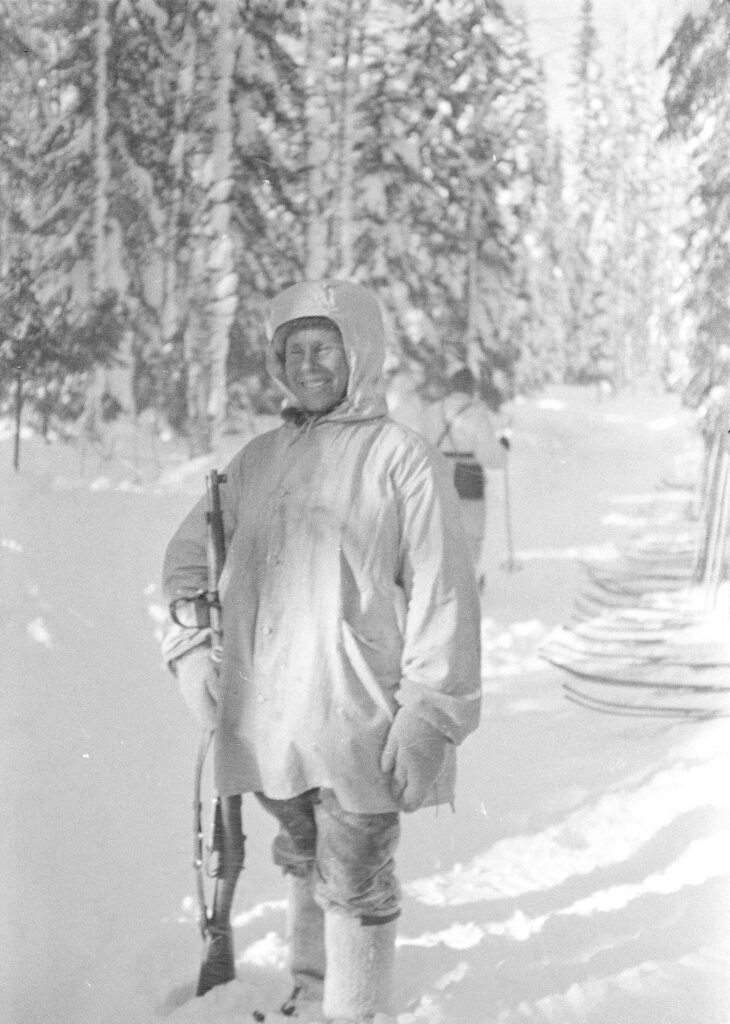
A common description calls Häyhä’s weapon simply a Russian-made Mosin–Nagant. That misses an important distinction. He used the Finnish-made M/28–30 infantry rifle, a Finnish development of the Mosin–Nagant system, known locally as the Pystykorva. Both Yle and the Kollaa museum identify this rifle and confirm that he used its iron sights rather than a telescopic sight. [1][3]
The iron-sighted setup is often explained in terms of a lower shooting position and the absence of reflections from optical glass. These are understandable considerations, but they should not turn a complex wartime biography into a technical trick. Familiarity with the terrain, accumulated experience and the conditions at Kollaa also matter when assessing the historical accounts of his service. [3][4]
705, 542, 500 or 259: what do the records actually say?
The claim that Häyhä achieved “705 confirmed kills” is widely repeated online. It should not, however, be treated as a single independently audited figure. Wartime tallies, later published estimates and Häyhä’s retrospective memoir were produced at different times and for different purposes. [2][7]
| Figure | What it refers to |
|---|---|
| 219 | A mid-February 1940 rifle tally attributed to commander Antero Svensson. A contemporary assessment, not a complete independently verified postwar list. |
| 259 | A higher early-March rifle figure attributed to chaplain Antti Rantamaa’s records. |
| Around 500 | Häyhä’s own approximate estimate in the short memoir he wrote on 14 August 1940, after the fighting. |
| 542 | A figure published in Rantamaa’s later account and adopted by some subsequent writers. |
| 705 (505 + 200) | A popular aggregation of rifle and submachine-gun claims, often misleadingly presented as an exact, fully confirmed total. |
The question is not which number sounds most impressive, but who recorded it, when, and what it was supposed to count. Confirming individual casualties under battlefield conditions is difficult. Figures referring to rifle fire cannot simply be added to estimates of submachine-gun casualties and then called a verified final total. For that reason, ModofWar does not assign Häyhä one definitive kill count. His extraordinary reputation is a historical fact; the precision of every number attached to it is not. [2][7]
The epithet “White Death” requires similar caution. It became firmly associated with Häyhä, but modern claims about precisely who coined the name and when are not equally well documented. The wartime Finnish press certainly played a role in turning him into a widely known figure, as the local museum’s historical introduction makes clear. [1]
Severely wounded in March 1940
On 6 March 1940, one week before the war ended, Häyhä took part in a counterattack in the Ulismainen area south of the Kollaa River. According to the museum, he was leading an infantry squad. An explosive bullet fired by a Soviet soldier struck his face, causing devastating injuries. Rumours that he had died circulated, but he survived. [1][2][3]
His recovery was long and painful. Yle reports that he underwent numerous operations and that the injury left permanent scars. The sharp contrast between the soldier celebrated in the wartime press and the injured man facing a prolonged recovery is an essential part of his story. When Finland entered another war in 1941, he wished to return to service but was not accepted because of his injuries. [1][2][5]
The memoir discovered in 2017
For decades, few people knew that Häyhä had written a short account of the war in his own hand. Its discovery was reported by Yle in 2018. The booklet had been written on 14 August 1940, months after he was wounded: it was a retrospective memoir rather than a day-by-day journal kept in battle. [2]
Alongside Häyhä’s approximate casualty estimate, it preserved episodes of life at the front and his observations about fellow soldiers. Such personal records can bring a much more human dimension to a famous name. They must also be read critically: memory, wartime reporting and the influence of public reputation do not always produce the same historical picture. [2]
A quieter life after the war
After the war Häyhä spent many years farming in Ruokolahti and continued to enjoy the outdoors. He did not seek constant publicity. Interviews with people who knew him, reported by Yle, describe threats, unease at being recognised and a wish to retreat from public attention. [5]
He spent his final years in a veterans’ care home in Hamina and died there on 1 April 2002, aged 96. [5][6]

Beyond the legend
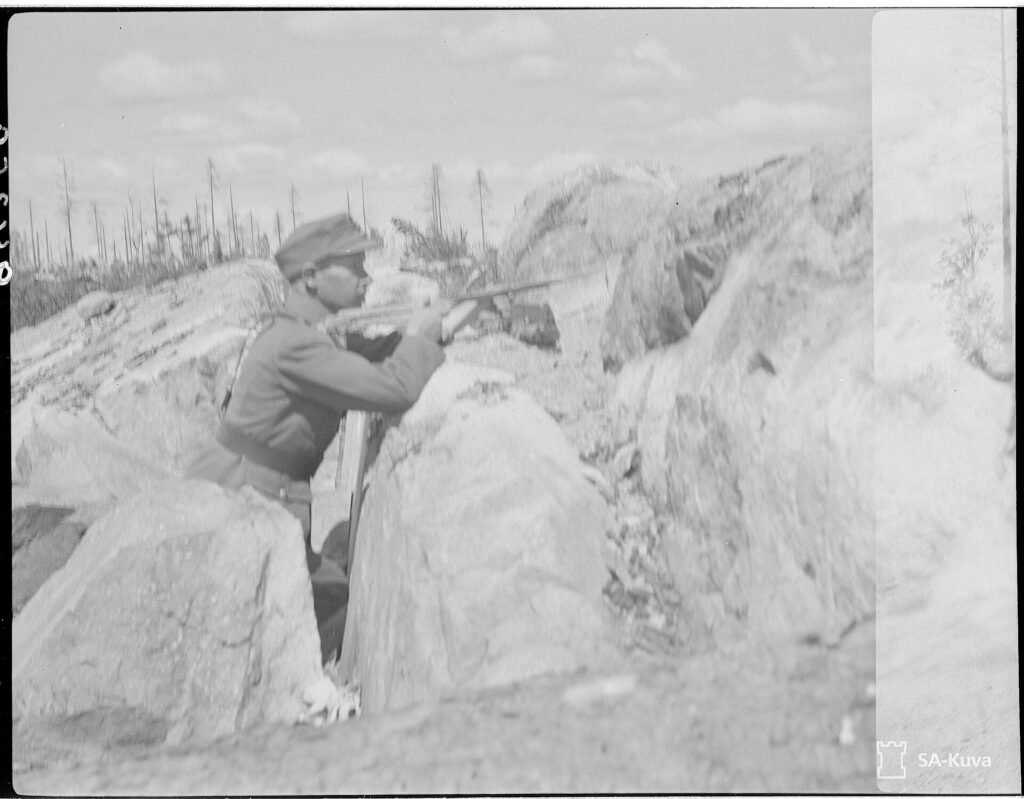
The remarkable story of Simo Häyhä belongs to the wider history of the Winter War, not merely to lists of records. His service at Kollaa, the Finnish M/28–30 rifle and his March 1940 wounding can be documented. Every numerical claim attributed to him cannot be established to the same standard. A responsible historical portrait gives room to both the soldier’s reputation and the human life behind it.
Sources and further reading
- Kollaa and Simo Häyhä Museum — Short Introduction — unit and front, rifle, wounding and later life.
- Yle — Discovery of Simo Häyhä’s handwritten memoir (2018) — date and nature of the 1940 memoir; competing counts.
- Yle — The missing M/28–30 rifle (2018).
- Yle — Documentary profile of Simo Häyhä.
- Yle — Threats and anxiety after the war (2017).
- Yle — Birth and death dates (2015).
- Warfare History Network — A comparison of reported figures — secondary source used for source comparison.
Photograph credits: Finnish Defence Forces, Finnish Wartime Photograph Archive / SA-kuva. See individual file pages and CC BY 4.0. Cover photograph: Simo Häyhä on the Kollaa front, February 1940 — Finnish Wartime Photograph Archive (SA-kuva, no. 9480), CC BY 4.0; Wikimedia Commons.
