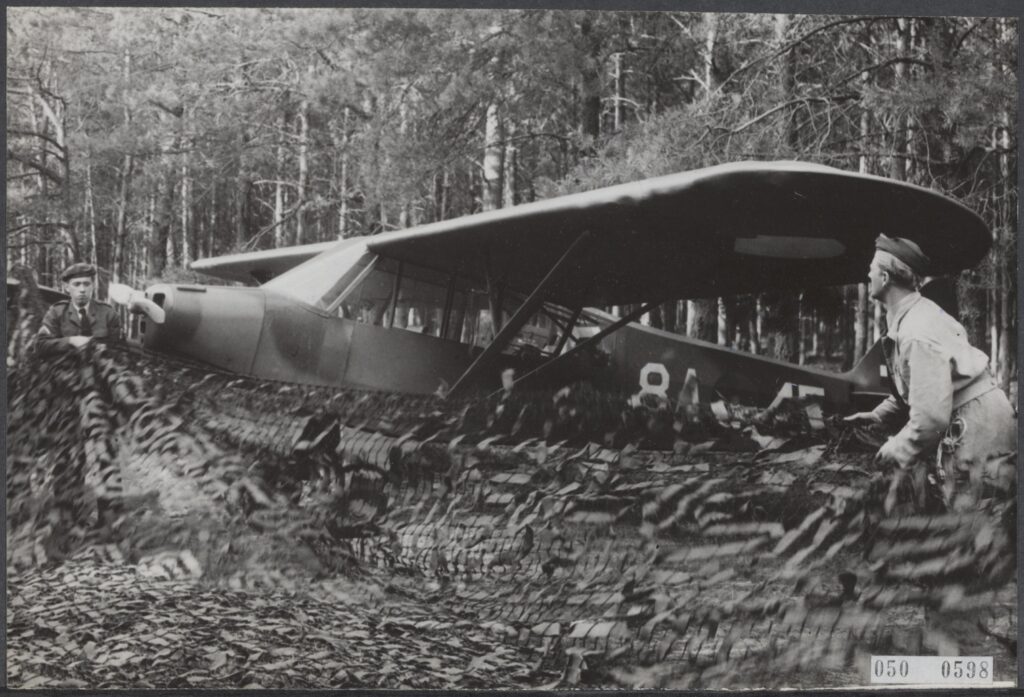
A flying observation post, not a fighter
Not every military aircraft over a battlefield needs to carry weapons. Sometimes the decisive contribution is an enemy position spotted from above, a correction to artillery fire or a report that reaches a ground commander before the situation changes. This was the work for which the Piper Cub and Super Cub family proved particularly valuable. Small and unassuming, these two-seat aircraft did not depend on speed or heavy equipment. Their usefulness lay in their ability to fly comparatively slowly, provide an observer with a good view of the ground and operate from relatively simple airfields.
In a modern photograph, a Piper Super Cub may look more like a flying-club machine than an aircraft associated with combat. Yet the experience of Turkish artillery aviators in the Korean War reveals how demanding and hazardous such work could be. The story begins not in Korea but with the establishment of Turkish Army artillery aviation after the Second World War.[1][2][3]
From the Cub to the Super Cub
Piper’s lightweight aircraft lineage became famous through the J-3 Cub. During the Second World War, military derivatives such as the L-4 Grasshopper demonstrated the value of small observation and liaison aircraft. The post-war PA-18 Super Cub continued that approach with improvements in structure and a range of more powerful engines. The Smithsonian National Air and Space Museum records the PA-18’s introduction in November 1949. Its high wing, struts, fixed tailwheel undercarriage and tandem seating preserved the characteristic Cub silhouette.[3]
“Super Cub,” however, was not a single unchanging specification. Several military designations and engine installations belong to the family. In Turkish service, the L-18B and L-18C must be distinguished from the later L-21B. The L-21B corresponded to the PA-18-135 and is identified by the FAA’s type-certificate documentation with the Lycoming O-290-D2 engine rated at 135 horsepower. Performance data for a 150-horsepower Super Cub should therefore not be silently applied to the L-21B.[4]
1948: The beginnings at Polatlı
The year 1948 marked a turning point in the establishment of aviation units supporting the Turkish Army’s artillery. An artillery aviation group was formed at Polatlı. The idea was practical: aircraft would offer a view beyond the ground observer’s line of sight, helping to locate positions and correct artillery fire. The Turkish Aeronautical Association played a part in flight training. Historical accounts mention Miles Magister trainers and early operational instruction in Piper L-4J aircraft, creating an unexpected connection between two very different aircraft in Turkish service.[2][5]
The names matter. The L-4J belonged to the earlier Cub generation, while the L-18 and L-21B Super Cub variants entered Turkish service as the organization expanded. These machines did not all appear simultaneously or perform identical assignments. What linked them was a way of thinking about aircraft as tools for observation, communication and support to ground units rather than as independent strike platforms.[5]
1950: Turkish artillery aviators in Korea
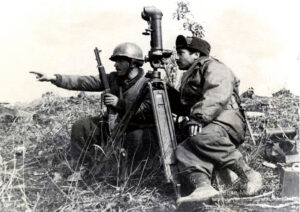
The Korean War began on 25 June 1950. Its rugged terrain and often difficult weather made aerial observation especially important. Turkish aviators supporting the Turkish Brigade’s artillery worked in an environment in which low-flying aircraft could be threatened by anti-aircraft fire, changing conditions and limited visibility. A secondary history of Turkish Army air observation posts reports that two Turkish-marked L-18B aircraft were assigned to the brigade in 1950, later being replaced by American L-19A Bird Dogs. Intriguingly, a recollection reproduced in the same compilation describes the initial aircraft as L-18C. The precise early variant should therefore be treated as unresolved, not disguised as an established fact.[5]
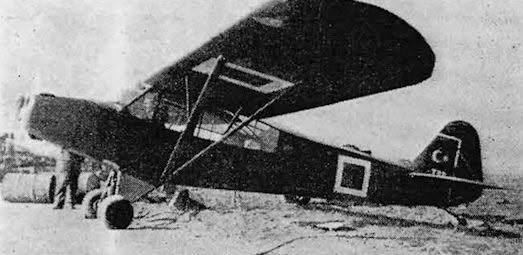
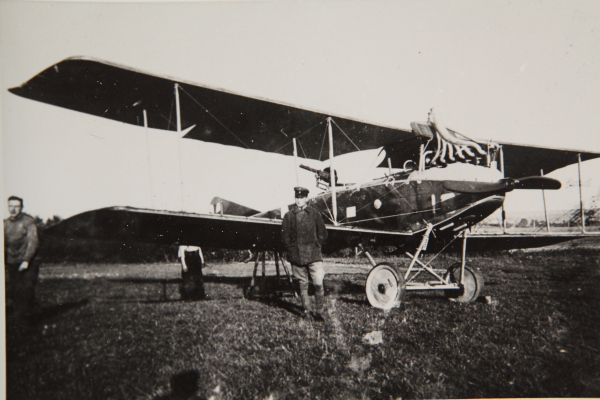
There is also a striking historical photograph said to depict a Turkish L-18B in South Korea. A description reproduced from the January 1998 Air-Britain Archive uses the word “reportedly.” That qualifier matters: it identifies an attribution, not proof of the place of exposure. Without the original negative, caption, provenance or independent unit record, the picture alone cannot establish the location, aircraft serial or date. Its copyright and permission status must also be resolved before publication.[6]
The 480 missions recorded by Parliament
The strongest evidence for the aviators’ work is not an aircraft photograph but a contemporary parliamentary record. On 23 May 1952, during debate in the Turkish Grand National Assembly on compensation for aviators, deputy Besim Besin read a commendation concerning Turkish artillery pilots in Korea. The record states that two Turkish officers undertook a combined total of 480 flying assignments between 12 November 1950 and 5 May 1951. The figure refers to the two officers as a group; it does not mean that each man flew 480 missions.[1]
The account describes low-altitude, low-speed flights over difficult terrain, in adverse weather and under the threat of enemy anti-aircraft fire. Their duties included observing and adjusting artillery fire, identifying enemy and friendly positions, and conducting reconnaissance. The same debate also reproduced a commendation from Turkish Brigade commander Tahsin Yazıcı dated 8 January 1951. In those documents, the abstract idea of an airborne observation post becomes the experience of men flying dangerous assignments in direct support of troops on the ground.[1]
Crucially, the parliamentary record does not provide a type-by-type log of the 480 missions or the serial numbers of the aircraft employed. It cannot be used to attribute every mission to an L-18B, an L-18C or, especially, the later L-21B. What is documented is the Turkish artillery aviators’ service—not a particular Piper airframe.
After Korea: The L-21B and a changing Army Aviation service
Light observation and liaison flying remained important long after the Korean War. During the 1950s, variants of the Piper Super Cub family became part of the growing Turkish Army Aviation structure. The L-21B, including aircraft in olive-drab Army markings, belonged to this later phase. Its appearance is familiar from surviving photographs and scale-model marking guides. Nevertheless, a decal number is evidence of a kit manufacturer’s selected scheme, not necessarily independent proof of an individual aircraft’s operational history.[5][7]
Army Aviation’s school moved to Güvercinlik in 1958. Through the 1960s, additional fixed-wing types and helicopters increasingly assumed tasks previously performed by light Pipers. The Super Cub did not vanish overnight: secondary historical accounts place some of these aircraft in training and other duties into the 1970s. There is no sound basis for treating the entire family as having been withdrawn on one precisely determined date.[2][5]
A tangible link survives at the Istanbul Aviation Museum. A former Turkish Army Super Cub carrying the number 10306 has been photographed there, including in November 2024. One current photographic catalogue identifies it as an L-18C, while older references have described the serial in an L-18B context. The disagreement illustrates why individual aircraft histories need more than a single caption. The museum aircraft 10306 should not be confused with the 13422 markings supplied in PM Model’s L-21B kit.[6][7]
Why these small aircraft deserve to be remembered
A Super Cub’s role was not to compete with fighters or bombers. It was to give ground forces the view and information they could not obtain from the ground alone. The parliamentary account of 480 assignments shows how much could be demanded of such an apparently modest machine and the aviators who flew observation missions.
The Turkish Army’s Piper story stretches from training and artillery cooperation at Polatlı, through the dangerous skies over Korea, to the modernization of Army Aviation at Güvercinlik. Preserving its history also means preserving the distinctions: between L-18 and L-21B, between testimony and independently verified records, and between the identity of a model kit’s chosen markings and a real airframe’s service. These distinctions make the story more compelling, not less.