By the late 1930s, the arrival of modern military monoplanes called for a different approach to pilot training. The British Miles M.14 Magister was designed for that transition. In Turkey, its significance extended beyond the flying school: the aircraft also became part of the country’s early efforts to manufacture aeroplanes under licence.
A trainer for a new generation
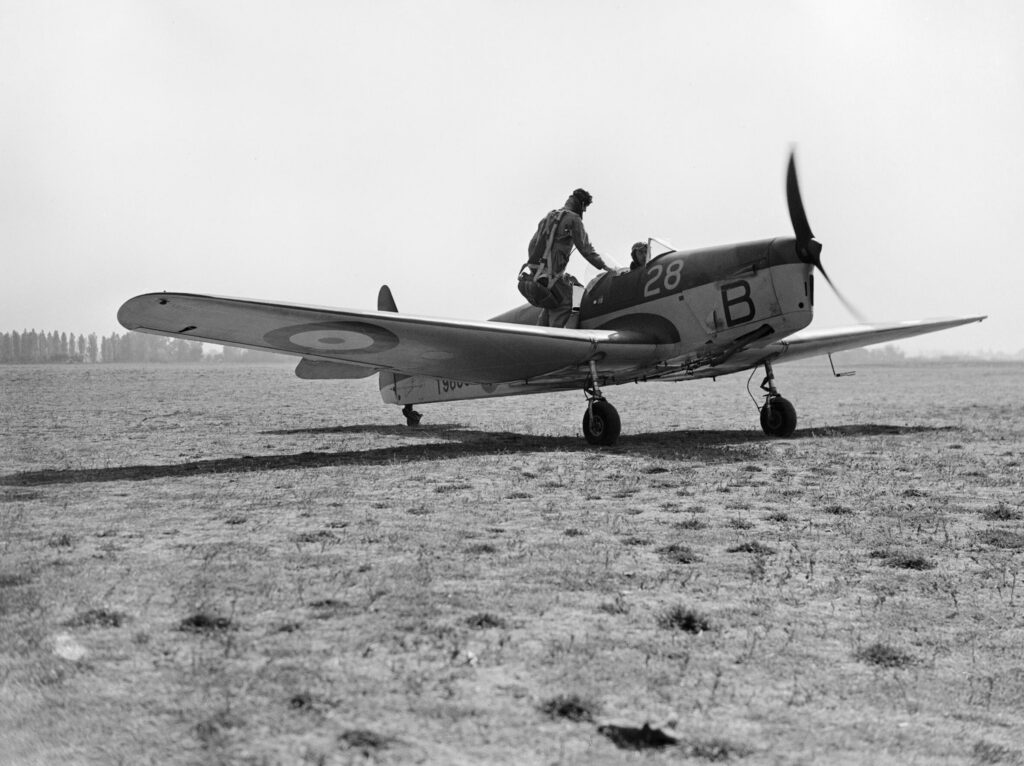
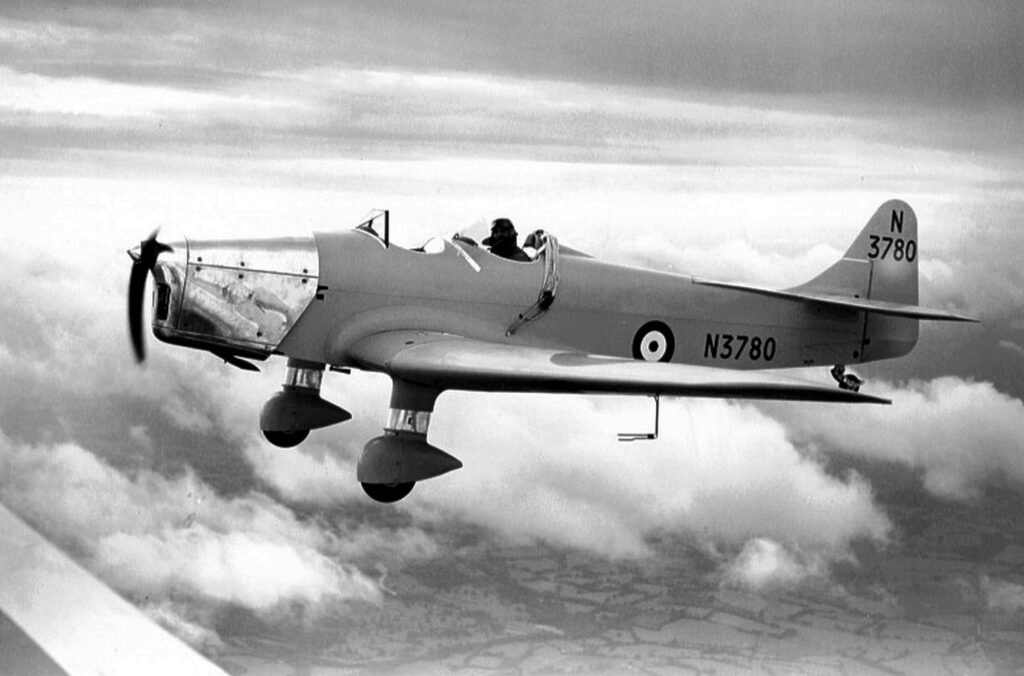
Developed from the Miles Hawk family, the M.14 Magister first flew on 20 March 1937. Its fixed undercarriage, low-mounted wing, wooden structure and two open cockpits in tandem gave it a straightforward appearance. That simplicity was deliberate. The aircraft introduced students to the handling of modern monoplanes without the complexity of front-line combat machines.
The airframe employed timber and plywood construction, powered by a de Havilland Gipsy Major engine of approximately 130 horsepower. Experience with the original M.14 led to refinements in the tail and anti-spin arrangements, incorporated into the later M.14A.
Entering Turkish service
According to the Turkish Air Force Command’s Aircraft Album 1911–2009, the Magister entered the Turkish inventory in 1941 and remained in service until 1960. The album records 70 imported aircraft acquired in 1941–42, 26 built at Kayseri in 1941–42, and 20 built at Etimesgut in 1944. Together, these figures form the album’s stated inventory total of 116 aircraft.
Magisters served with the 1st and 2nd Companies of the 1st Training Battalion at the Air School in the 1942–50 period. The same source reports continued service with the Air Force Academy between 1951 and 1960, and the transfer of some aircraft to the Turkish Aeronautical Association (Türk Hava Kurumu, THK).
The Magister was not a combat aircraft. Its value lay in training: giving future military pilots experience in a relatively forgiving, two-seat monoplane.
Built in Turkey: Kayseri and Etimesgut
Licence production makes the Turkish Magister story particularly notable. Construction began at Kayseri and subsequently continued through the THK facilities at Etimesgut, Ankara. A historical study by Özgür Genç records that the first Magister constructed at Etimesgut flew on 7 June 1942, during an event organised by the Turkish Aeronautical Association. Wartime shortages of imported materials and limitations in infrastructure made larger-scale production difficult.
The production totals are not entirely settled. The 2009 Turkish Air Force album cites 20 Etimesgut-built aircraft for 1944; Genç’s 2018 thesis reports 80 produced there between 1944 and 1948, while also noting a separate archival figure of 74. These figures may reflect different periods or definitions of completed aircraft. They should therefore be cited with their sources rather than presented as a single uncontested number.
Even with this uncertainty, the broader story is clear: Magister connected the requirements of military flight training with the development of aircraft manufacturing capabilities in Turkey during the Second World War.
Turkish markings: “2” or “02”?
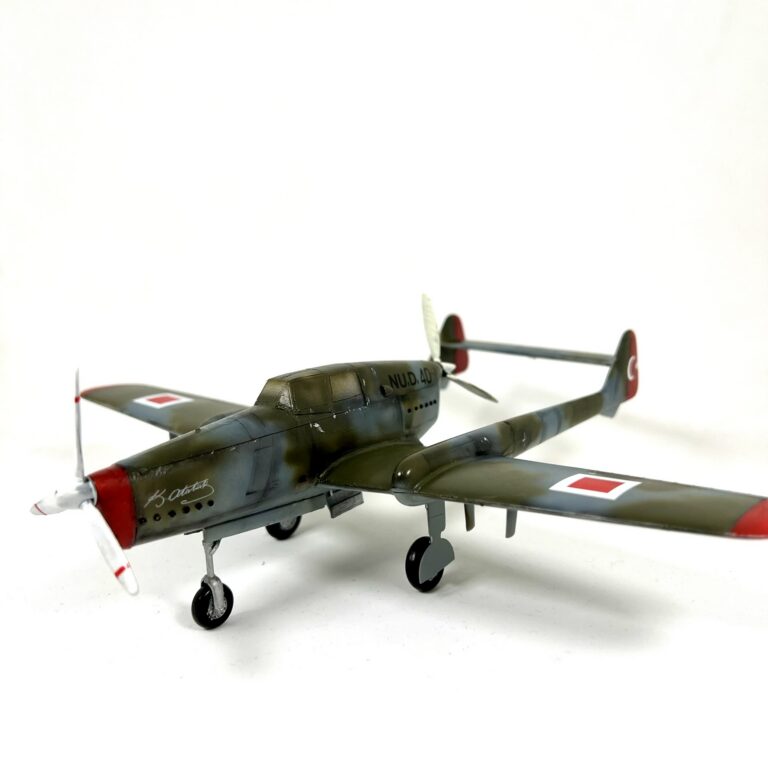
Special Hobby’s SH48149 1/48 kit offers a Turkish M.14A Magister with a dark-green finish, red-and-white Turkish markings and the individual number “2”. The manufacturer’s scheme is described in a contemporary kit review as representing a basic training unit around 1944. That review also raises an important qualification: surviving examples of Turkish markings suggest that “02” may be another possibility, so the exact single-digit interpretation has not been independently confirmed.
For this reason, the marking should be described as Special Hobby’s interpretation of a Turkish-service Magister, rather than as a proven identification of a particular historic airframe. The related ModofWar scale model follows the kit instructions.