An aircraft bridging two eras
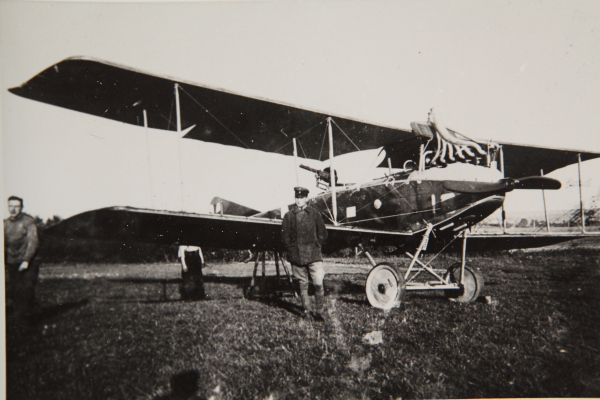
Only a few years separated the First World War from the Turkish War of Independence, but the conditions in which military aircraft operated had changed drastically. Aircraft obtained during the Ottoman Empire’s wartime cooperation with Germany became part of the material inheritance of a force that soon faced shortages of serviceable machines, spare parts and maintenance facilities. The Albatros C.III, a German two-seat reconnaissance aircraft introduced into Ottoman service in 1916, was one of the types that crossed this divide. Two survivors were later repaired and used during the National Struggle. [1][2][6]
Its importance to Turkish aviation lies less in a single famous victory than in the continuity of flying experience and technical work. During the First World War, the type belonged to organised military aviation supported by German equipment and expertise. After the Armistice, keeping even a handful of aircraft airborne required ingenuity, careful repair and the recovery of usable components. The C.III thus connects two very different stages in the history of Turkish military aviation. [1][6]
Developing the C.III from the C.I
The Albatros Flugzeugwerke developed the C.III from the earlier Albatros C.I. It retained the two-seat reconnaissance arrangement but introduced changes to the airframe, notably a more rounded, lower vertical tail that made the C.III readily distinguishable from its predecessor. It belonged to the family of German C-class aircraft built with wooden structures, fabric-covered wings, external bracing and a liquid-cooled inline engine driving a tractor propeller. [4][5]
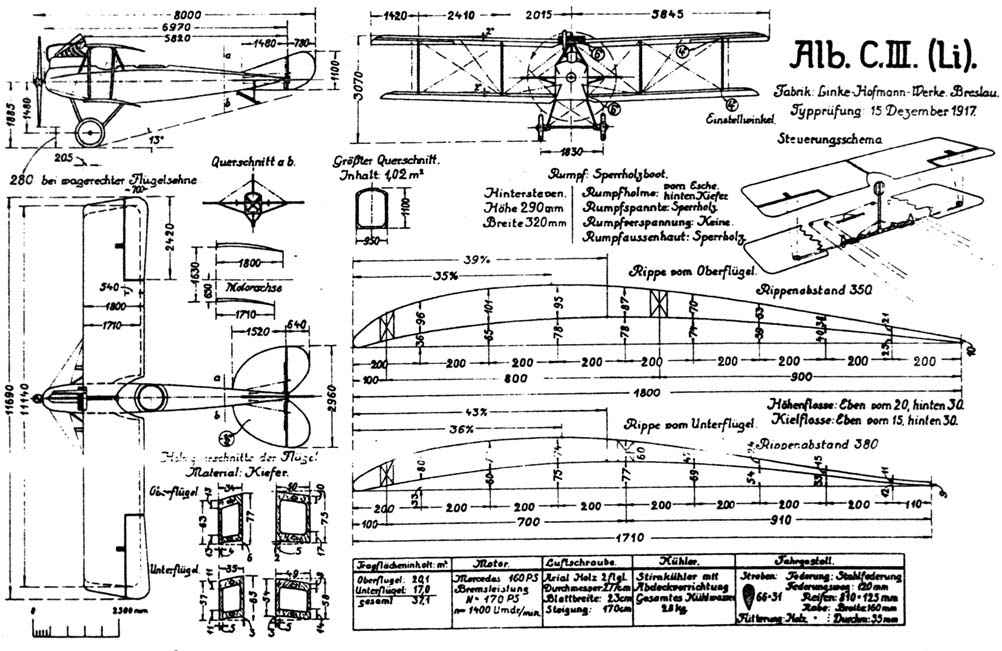
The pilot occupied the forward cockpit and the observer sat behind. Observation meant more than watching the landscape: the rear crew member could record troop movements, assist with reconnaissance and artillery cooperation and defend the aircraft using a flexible machine gun. Later production aircraft could also be equipped with a fixed, synchronised forward-firing gun for the pilot. Armament therefore varied, and it would be misleading to treat every aircraft as having an identical two-gun fit from the beginning of production. [4][5]
The C.III could be powered by either a 150 hp Benz Bz.III or a 160 hp Mercedes D.III, both inline engines. Besides reconnaissance and observation, the aircraft was used for light bombing and liaison with ground forces. Its modest bomb capacity and the limitations of early bombsights prevented it from becoming a precision bomber. What made it useful was its combination of two crew positions, a versatile layout and a flight endurance suitable for observation work. [4][5]
Entering Ottoman military aviation
The Albatros C.III entered Ottoman service in 1916. Turkish aircraft inventories commonly record 66 examples. The figure describes the inventory of a type rather than the number simultaneously fit to fly; maintenance requirements, accidents and shortages of materials affected wartime availability. Surviving lists of AK-numbered aircraft show that the C.III was not a single experimental purchase but an established operational type in Ottoman military aviation. [2][3]
German assistance was important not only in delivering aircraft but also in providing specialist knowledge and personnel. Every flight depended on work on the ground: engines and propellers had to be serviced, wooden airframes repaired, fabric coverings maintained, observers trained and scarce spares supplied. Within this system, C.III aircraft offered armed reconnaissance and, when circumstances permitted, light-bombing capability. Specific claims about the missions of individual Turkish aircraft require flight or unit records and should not be inferred merely from the type’s general capabilities. [2][3][6]
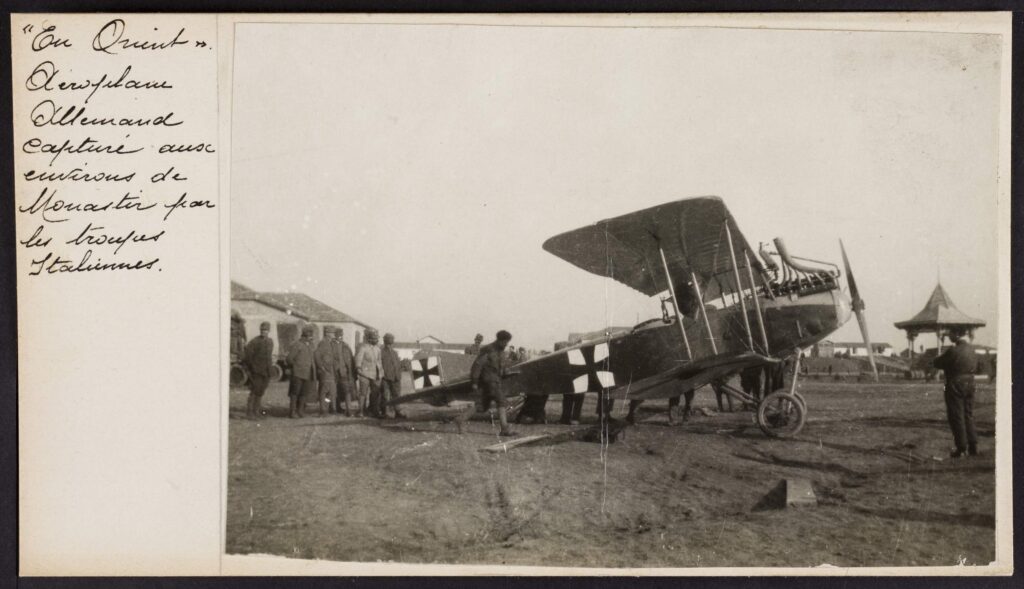
The Armistice of Mudros brought a different kind of challenge. The Ottoman aviation organisation lost much of its freedom of movement and access to equipment. Some aircraft and supplies were gathered or moved inland. The personnel who continued to work with the surviving machines faced the task of turning incomplete or unserviceable aircraft into usable flying equipment. [6]
Konya and the Second Aircraft Company
The clearest official account of the Albatros C.III in the Turkish War of Independence appears in the Turkish Ministry of National Defence’s history of the period. It states that the last two Albatros C.IIIs remaining from the First World War were repaired at Konya Aircraft Station. They then served with the Second Aircraft Company under Fazıl Bey. According to the same official account, both aircraft were withdrawn from service in 1921. [1]
This episode helps explain why the National Struggle’s aviation cannot be described solely through newly acquired aircraft. Airframes were assessed and repaired, useful components recovered and limited workshop capacity directed towards returning machines to flight. At a time when a small number of operational aircraft mattered, maintaining an older reconnaissance biplane could make a meaningful contribution to the air service. [1][6]
The Second Aircraft Company was connected with the Kartal Detachment, formed and sent to the Western Front in 1920 under Captain Fazıl’s command. The restored Albatros aircraft belong to this wider story of establishing an effective air element under difficult conditions. Their documented service should not, however, be expanded into named combat sorties or individual pilot stories without independent evidence for those particular flights. [1][6]
Why sources disagree on the final year
Some secondary Turkish aircraft inventories list the C.III in service through 1922. The Ministry of National Defence, however, explicitly states that the last two C.IIIs repaired at Konya were out of service in 1921. This dossier therefore uses 1921 for those final War of Independence aircraft, while acknowledging the later date given in other inventories. The reason for the discrepancy has not been established conclusively. [1][2]
A legacy of continuity
The Albatros C.III was not a fast modern bomber by later standards. Its strengths belonged to the needs of its own era: a two-person crew, reconnaissance capability and a structure that could serve several operational roles. In Turkish aviation, its larger significance was continuity. A type delivered for the Ottoman war effort could still be repaired and flown by the airmen of the National Struggle. [1][4]
The C.III consequently belongs in both the Ottoman Military Aviation and National Struggle chapters of ModofWar, but it should have one historical dossier, not two competing records. Its story is an effective introduction to the aircraft, people and workshops that linked the final years of the Ottoman air arm with the air service of the independence movement.