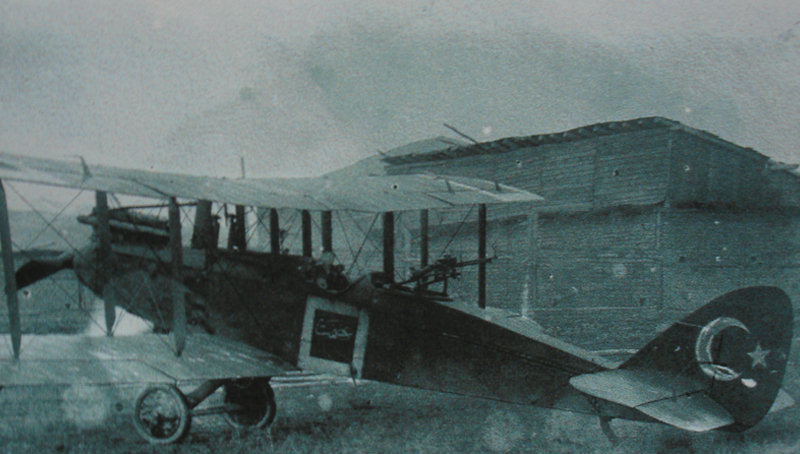
A two-seat aeroplane on a front short of aircraft
As the Battle of Sakarya approached, the Turkish Western Front had only a handful of serviceable aircraft. Bringing a machine into service could make a material difference to the army’s ability to observe opposing formations, track movements and provide timely information to commanders. In the summer of 1921, one such opportunity appeared unexpectedly: a Greek-operated Airco/de Havilland DH.9 made a forced landing near Muğla and Kuşadası and was captured. After difficult repair work, the aircraft entered Turkish service under the name “İsmet.” [1][2]
Originally designed in Britain for reconnaissance and daytime bombing during the First World War, the DH.9 became part of an entirely different story in Anatolia. Its significance lies not just in the sorties attributed to it, but in the people who made it fly again. A captured aeroplane had to be repaired, flight-tested and moved to a functioning front-line unit despite acute shortages of equipment and spare parts. [1][2]
From the DH.4 to the DH.9
Designed by Geoffrey de Havilland for the Aircraft Manufacturing Company (Airco), the DH.9 was developed from the earlier DH.4. The prototype first flew in 1917, and the type was in operational use during the final year of the First World War. Its wooden structure, fabric-covered surfaces and braced biplane wings were typical of the period. One important improvement over the DH.4 was the cockpit layout: the pilot and observer sat closer together, improving communication during flight. [4][5]
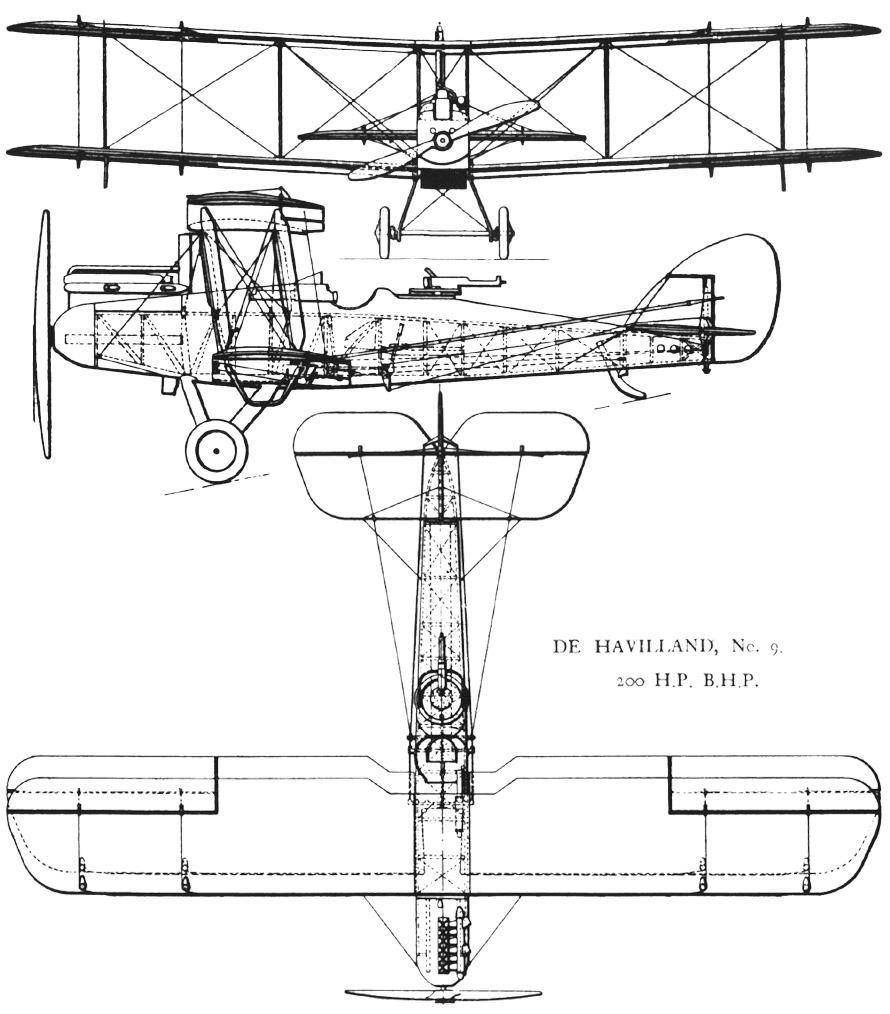
Standard DH.9s were powered by a water-cooled, six-cylinder Armstrong Siddeley Puma engine. The engine failed to deliver the performance originally expected from the design, a weakness that marked much of the type’s wartime record. Nevertheless, large-scale manufacture and the circulation of aircraft after 1918 meant that DH.9s appeared in many countries during the early 1920s. [4][5]
The DH.9A was a substantially different development, using a more powerful Liberty engine and a changed airframe. Its figures must not be substituted for the original Puma-engined DH.9. The technical specifications in this dossier refer to the latter. [4][5]
The forced landing and the return to flight
In the summer of 1921, a Greek DH.9 lost its way and made a forced landing in the Muğla–Kuşadası area. For the Turkish air service, acquiring the aircraft was only the beginning. To make it operational, the machine had to be examined, repaired and then delivered to the Western Front. Civilian pilot Vecihi Hürkuş, chief mechanic Eşref Koçman, and observer Lieutenant Hamdi Çaypınar are named in the detailed historical account of the mission. [1][2]
In her scholarly study of Western Front aviation units, Fatma Rezzan Ünalp records a repair effort lasting roughly ten days. Vecihi flew the aircraft to Akşehir on 21 August 1921, then to Ankara on 23 August, before it reached the aviation unit at Malıköy on 24 August. Some shorter retellings compress those movements into a single arrival date; keeping the stages separate gives a more accurate picture of the journey. [2][3]
The captured aircraft received the name “İsmet,” associated with İsmet Paşa, commander of the Western Front. A former enemy aircraft had become one of the few machines available to support Turkish aerial reconnaissance. The episode illustrates how maintenance skills and the ability to move serviceable aircraft between improvised airfields were essential components of the war effort. [1][2]
Reconnaissance at the Battle of Sakarya
The Battle of Sakarya, fought between 23 August and 13 September 1921, placed great demands on the defenders’ ability to understand Greek troop movements along an extended front. Turkish aircraft operating around Malıköy helped observe formations, approach routes, reinforcements and withdrawals. The Ministry of National Defence describes a tiny air force maintained under improvised conditions, with mechanics at times working by lantern and kindling light through the night. [1]
On a DH.9, the pilot controlled the aircraft while the observer could examine the ground, identify important movements and report findings. Although designed with a bombing capability, the specific historical descriptions of “İsmet” particularly emphasize the value of reconnaissance. It would be misleading to assume that every sortie flown by this aircraft was a bombing mission. [1][2]
Figures for sorties during Sakarya require care. Ünalp records approximately forty sorties in eighteen days for the Turkish air force as a whole, rather than forty missions by “İsmet” alone. Some popular accounts assign different totals to individual aircraft. The historical conclusion supported by both the academic study and the Ministry’s account is that the DH.9 provided useful operational reconnaissance when reliable machines were scarce. [1][2]
The Great Offensive and three more captured DH.9s
The history of the type in Turkish service did not end at Sakarya. The Ministry of National Defence also records “İsmet” as participating in the Great Offensive of 1922. Following the liberation of İzmir on 9 September 1922, Turkish forces captured three more DH.9 aircraft at the Seydiköy (Gaziemir) airfield. Thus the original captured aircraft was joined by further machines of the same type. [1]
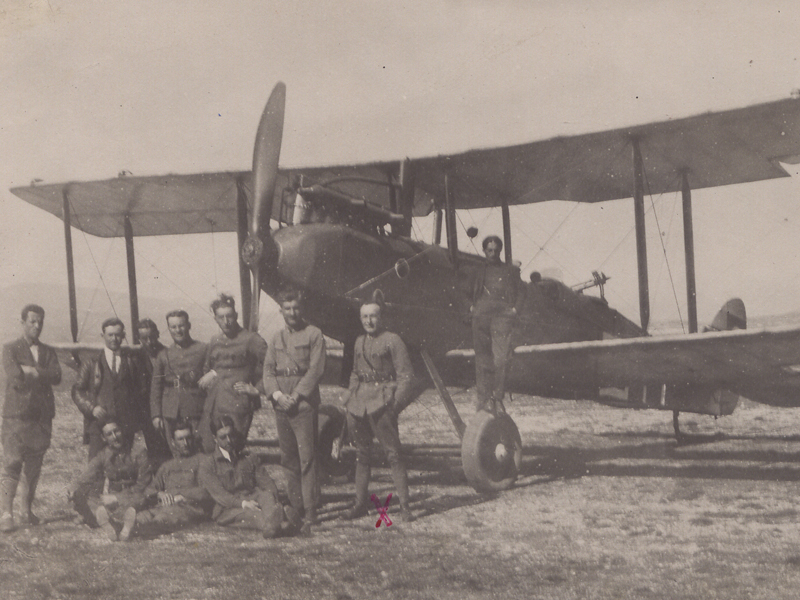
A specialized secondary inventory lists four DH.9s in Turkish service, the first “İsmet” plus the three machines captured in 1922, and gives an end-of-service date of 1925. The Ministry’s account concentrates on the 1921–1922 wartime period, so the 1925 date is presented here as a secondary inventory figure, not as a separately confirmed official retirement order. Specific service histories for each of the three later airframes remain insufficiently documented to attach precise sorties, pilots or aircraft identities to them. [1][3]
Why “İsmet” matters
The story of the DH.9 “İsmet” is fundamentally about resourcefulness. An aircraft forced down behind the lines was repaired under difficult circumstances, flown across Anatolia and put to work in a campaign where very few aircraft were available. The efforts of Vecihi Hürkuş and his colleagues mattered as much as the specifications of the machine they saved. [1][2]
Read alongside the histories of the Breguet XIV “Sakarya” and surviving Albatros C.III reconnaissance aircraft, the DH.9 illustrates the conditions in which Turkish military aviation endured the War of Independence and began its transition into the early Republic: small numbers of aircraft, constant maintenance, the strategic importance of observation, and remarkable dedication among aircrews and mechanics. [1][2]
Editorial source note
The 1925 end date and four-aircraft total come from the specialist secondary inventory [3]; the academic source [2] and Ministry account [1] establish the 1921 repair and delivery and the three additional captures in September 1922. Some secondary copy contains an obvious typographical 1923 for the 1921 journey. The present text follows the documented 1921 chronology. Technical figures describe the standard Puma-engined DH.9 type, not individually measured Turkish airframes.