
A Gustav with its engine on display
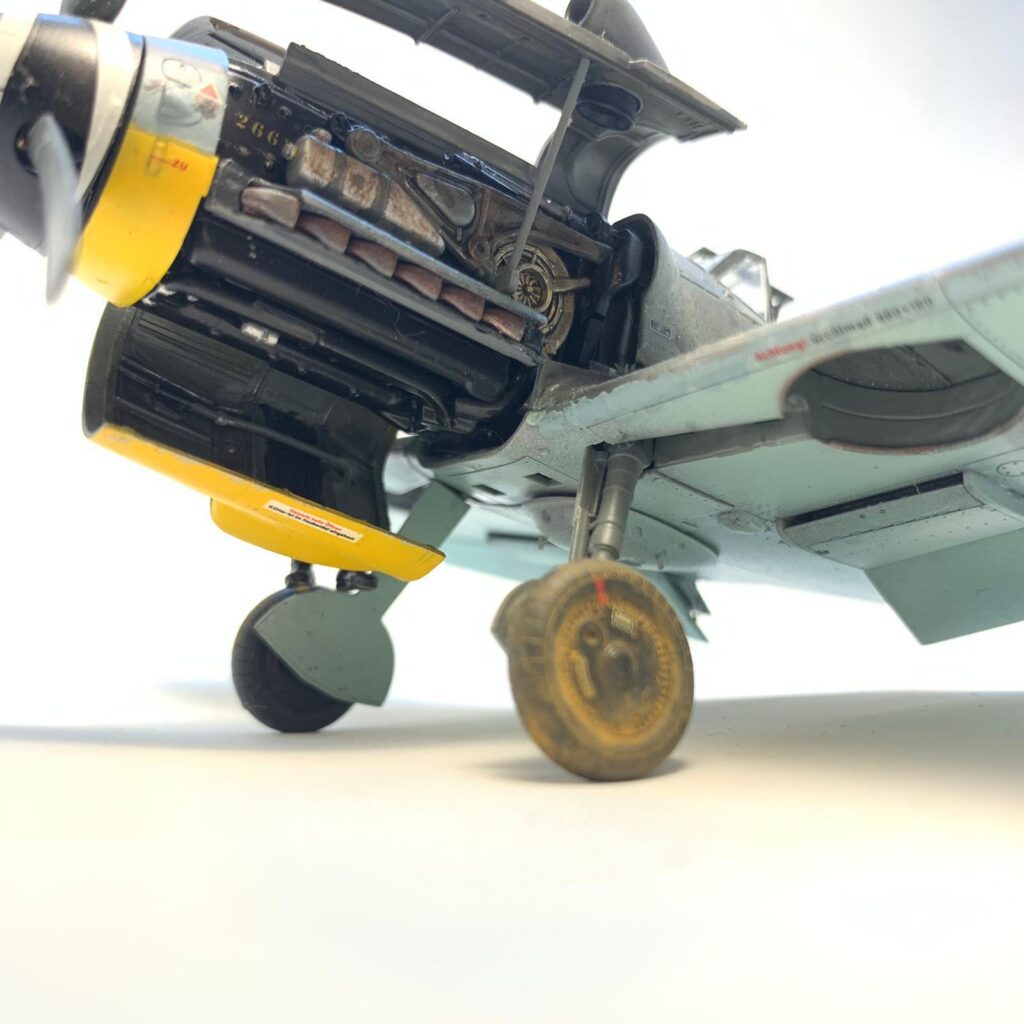
Tamiya’s 1/48 Messerschmitt Bf 109 G-6 is the kind of model that makes its engineering part of the attraction. Released in 2017, kit 61117 includes a detailed engine and an unusual solution for the cowling panels: small magnets allow them to be attached or removed without committing to a permanently open or closed display. The completed aircraft can therefore be shown with the DB 605 visible or with the distinctive G-6 cowling in place. [1]
That is what makes the kit particularly appealing to me. The exposed engine adds interest, while closing the panels restores the aircraft’s familiar silhouette. The canopy can also be assembled open or closed. These choices make the finished subject rewarding to look at and photograph from different angles.
The aircraft I chose
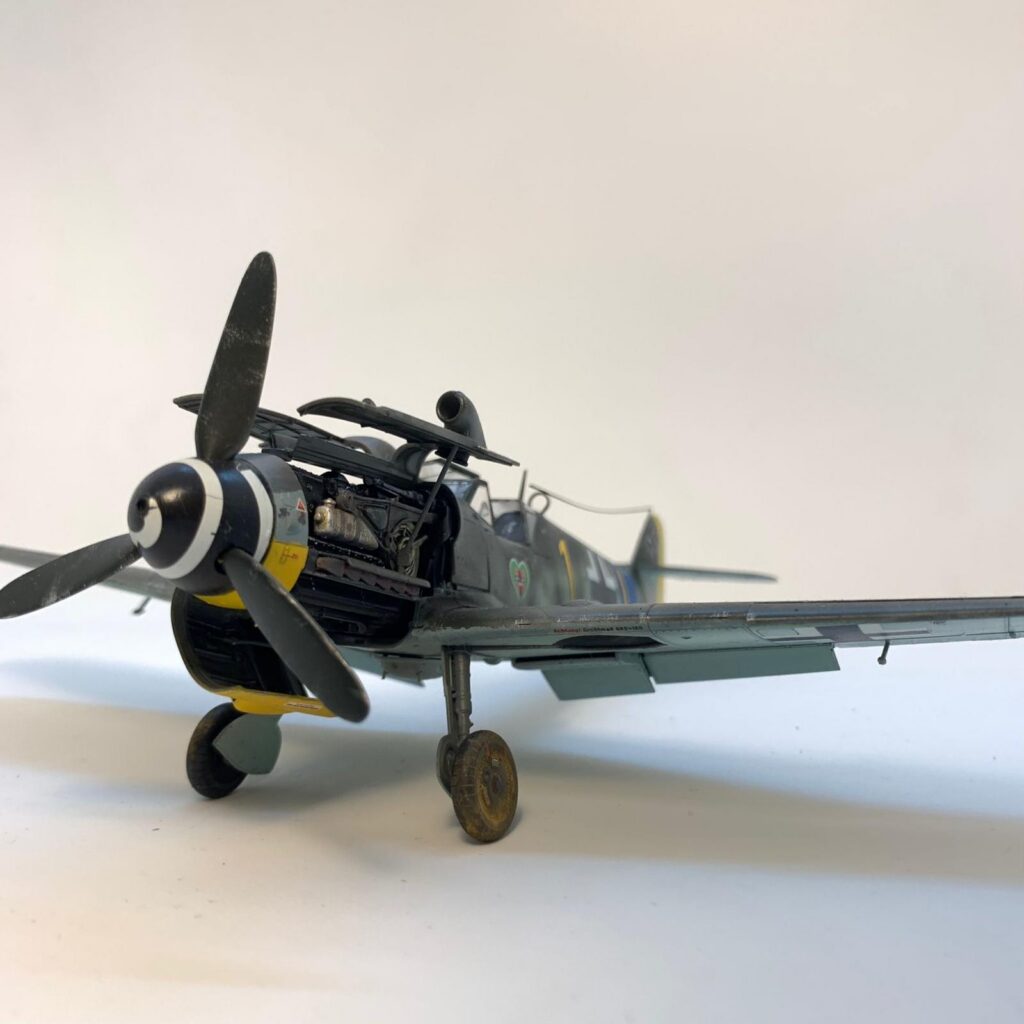
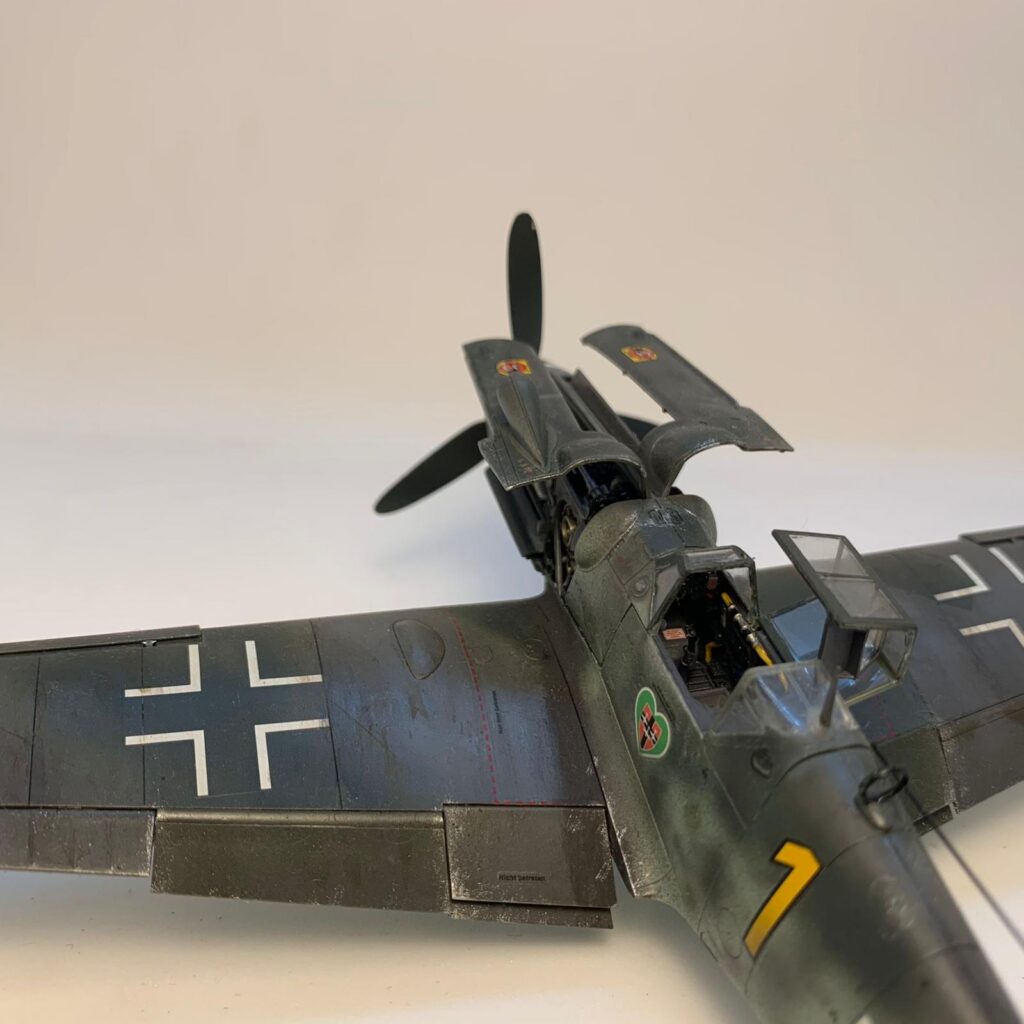
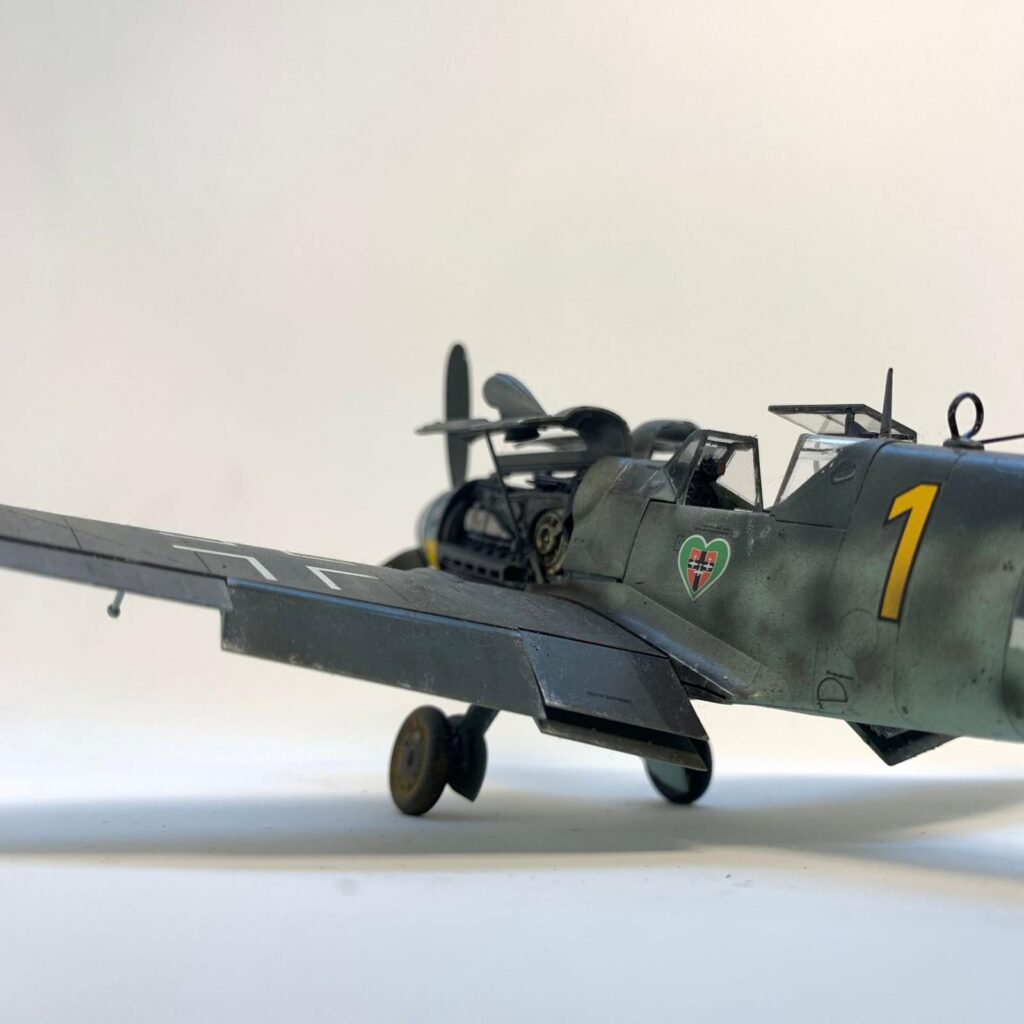
Tamiya provides three marking options. I chose Wilhelm Schilling’s “Yellow 1”, listed in the painting guide as 9./JG 54, Ludwigslust, February 1944. Specialist kit references identify the original aircraft as Werknummer 440141. [1][2][3]
The familiar Beule cowling bulges are one of the defining features of the G-6. This article, however, is about building the scale model rather than retelling the entire aircraft history. The development of the DB 605-powered Gustav, its armament and Schilling’s wartime service belong in our companion Bf 109 G-6 Historical Dossier.
Engine detail and interchangeable cowlings
The original ModofWar gallery includes photographs of the cowling open, a close-up of the DB 605 engine, and several views of the completed Yellow 1 aircraft. They show why this feature is much more than a box-side selling point. The engine remains a visible part of the finished model, and the panels can be put back on for a clean display. [1]
The newly provided photographs show my finished model with the engine cowling open, canopy open, and two maintenance figures working around the exposed engine. Their manufacturer or set number has not been established. The kit also provides alternative air intakes, an optional drop tank, wing-mounted cannon gondolas, adjustable flap positions and a pilot figure. These are available kit features, not a claim that I fitted every option to my build. [1]
Camouflage, paints and weathering references
I painted the main camouflage with the corresponding RLM colours from AK Interactive’s Air Series — Luftwaffe Camouflage range, not with the mixed Tamiya acrylic colours suggested in the kit instructions. I used Tamiya paints only on the specific details listed in the paint table. The Tamiya 61117 guide remains a reference for the marking option, not proof of which camouflage paints I applied.
Weathering: The photos show a used finish, notably on the landing-gear wheels, engine and some panels. I have not recorded the specific pigments, washes, panel-line products or varnishes used on this model.
Gallery of the completed build
Engine and cowlings


Finished


New photographs: details
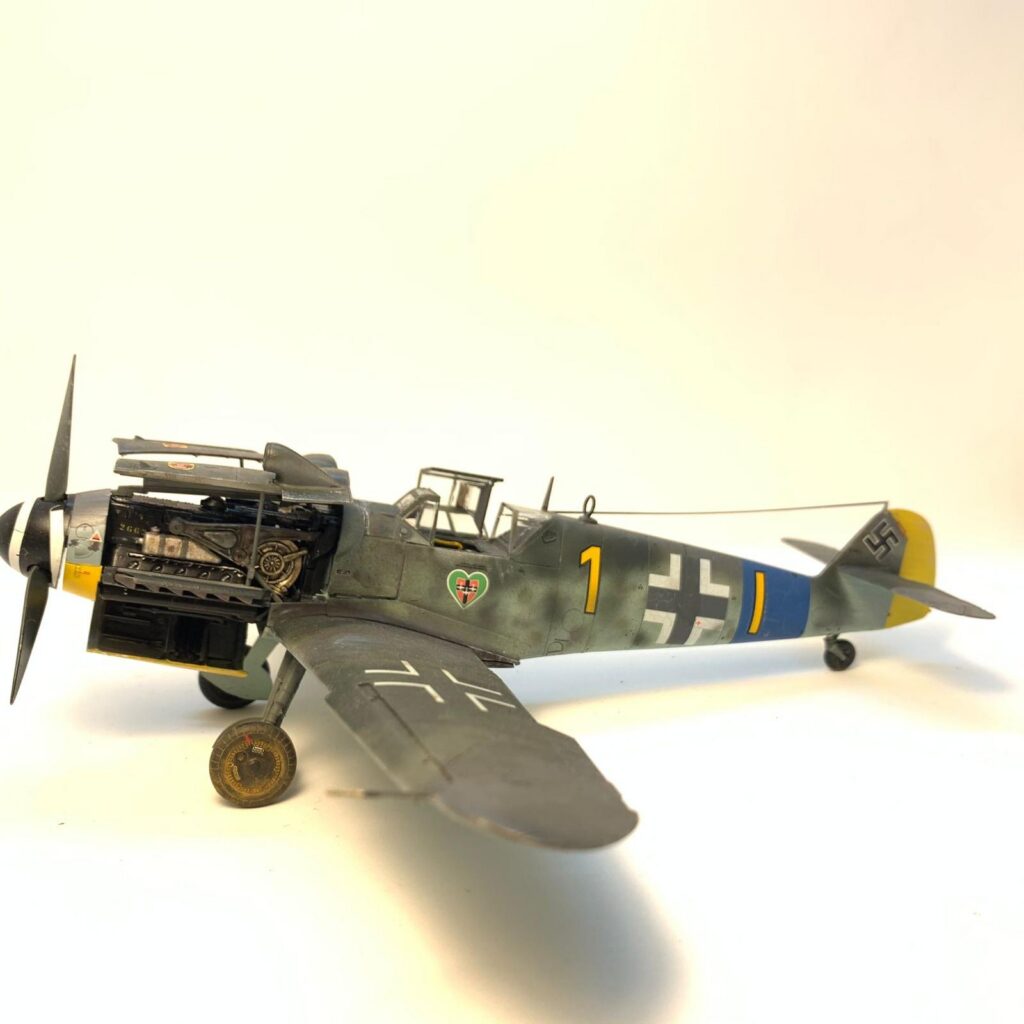
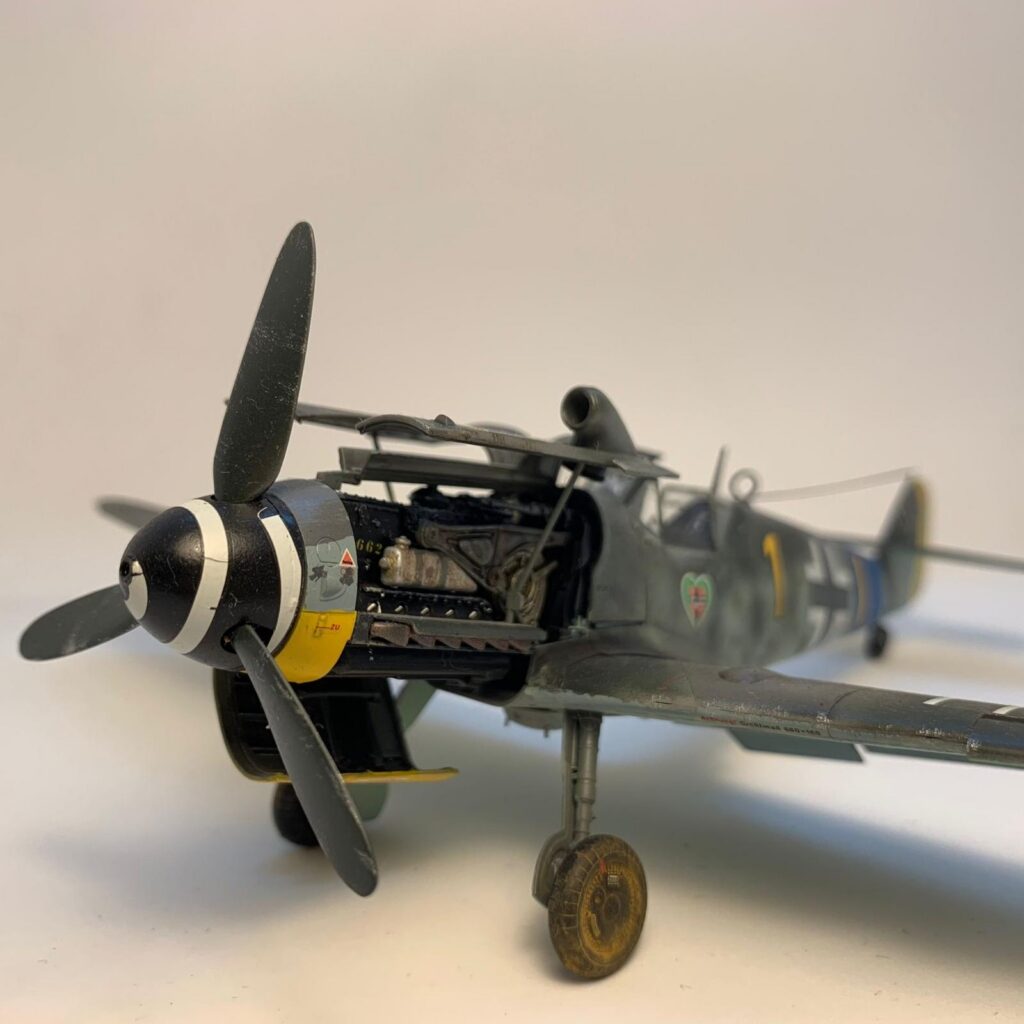
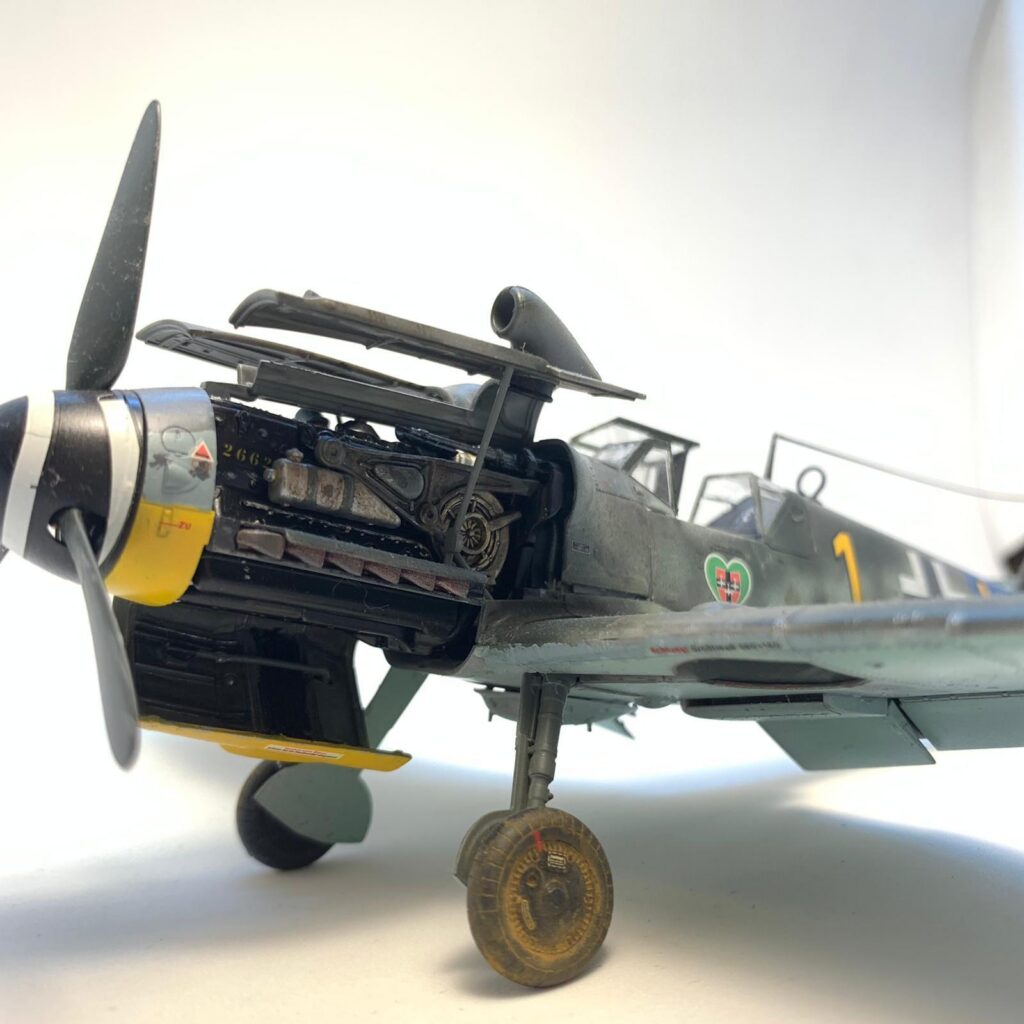
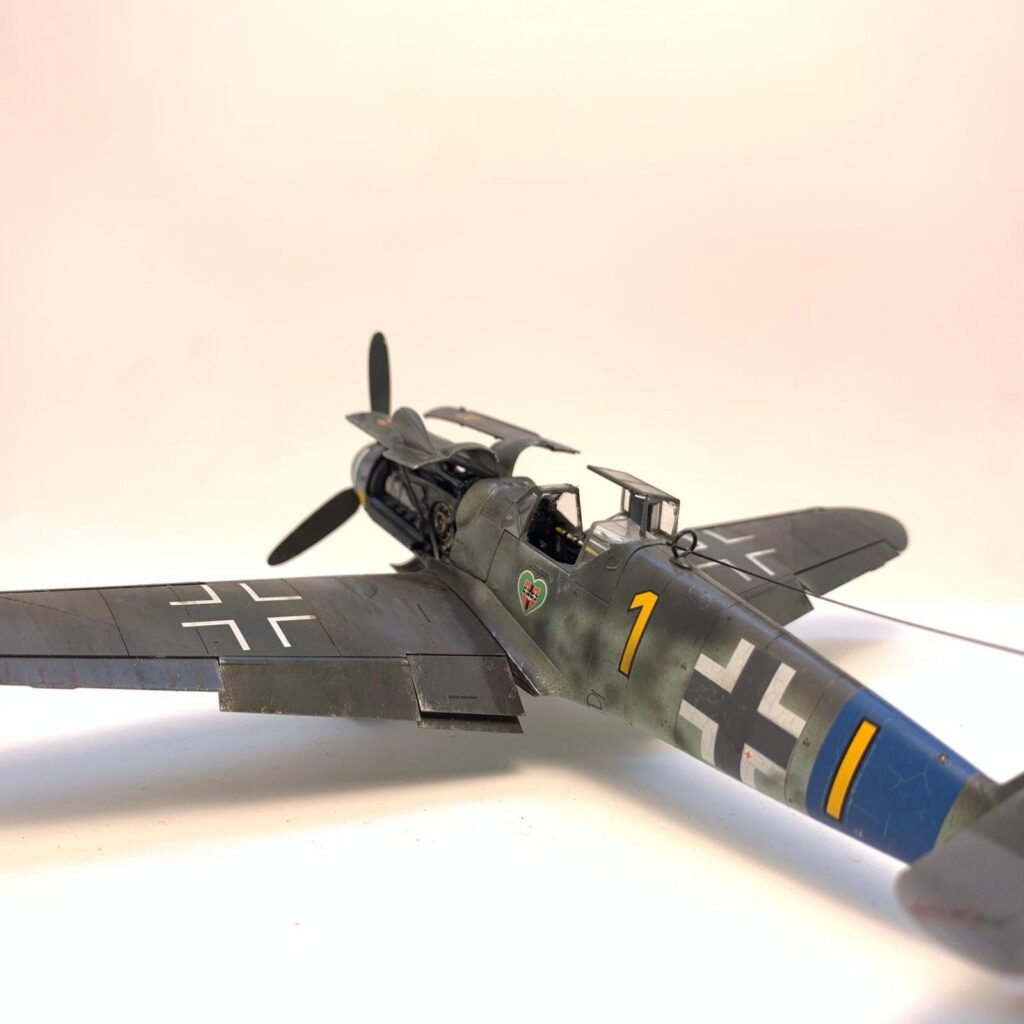
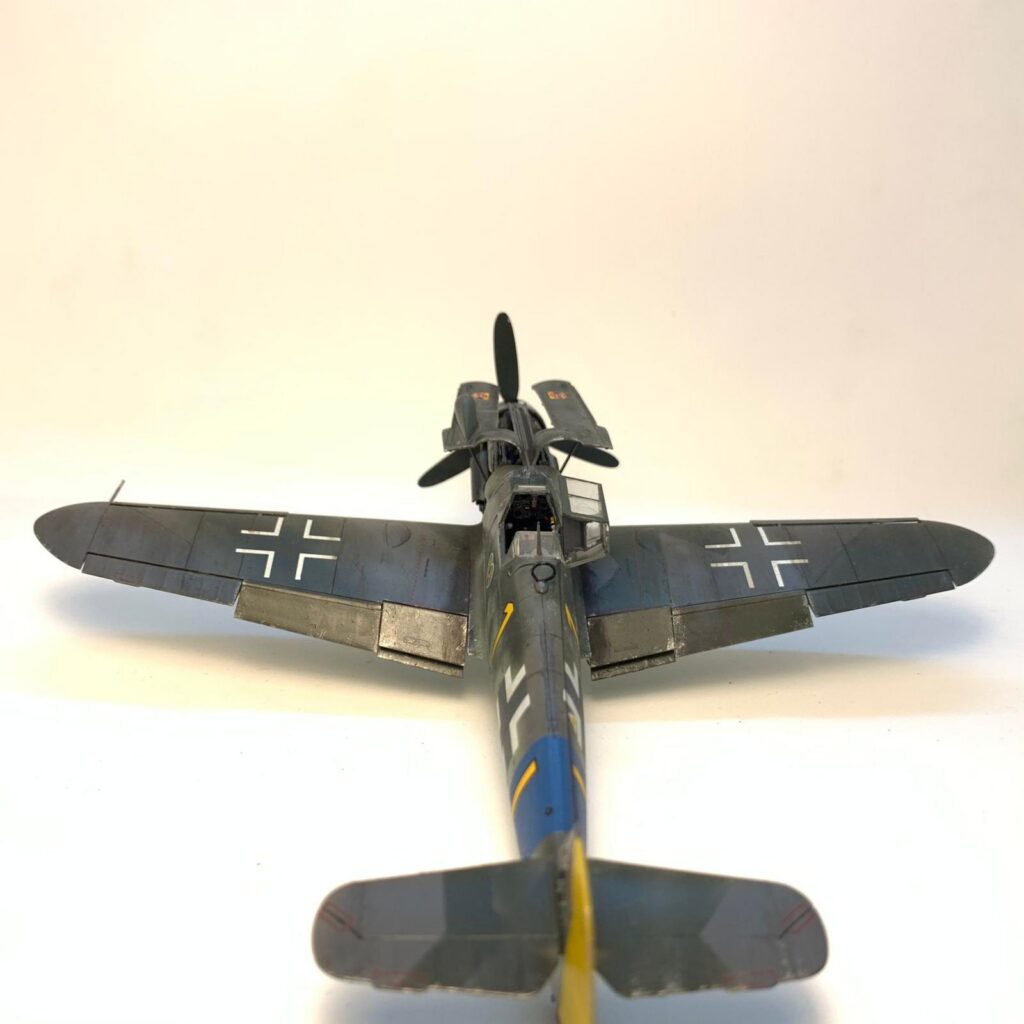
Maintenance scene
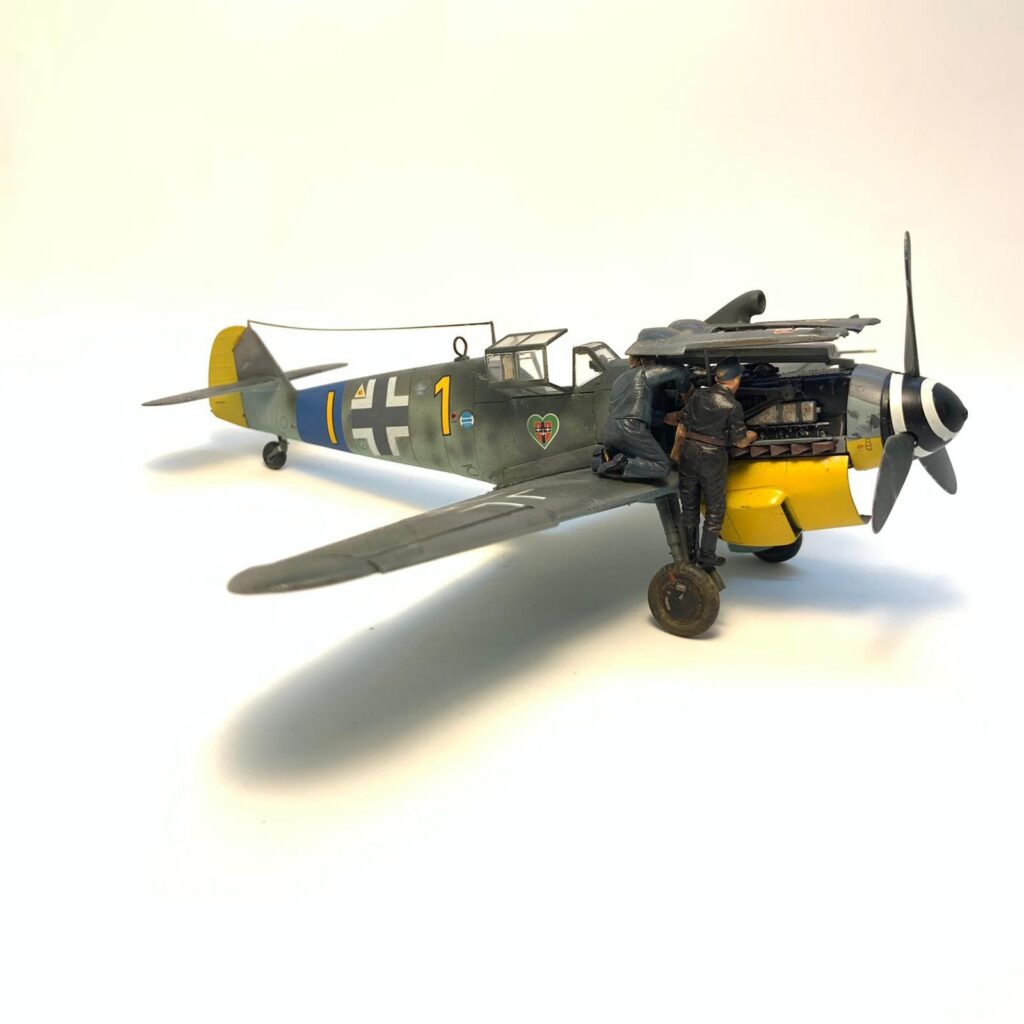
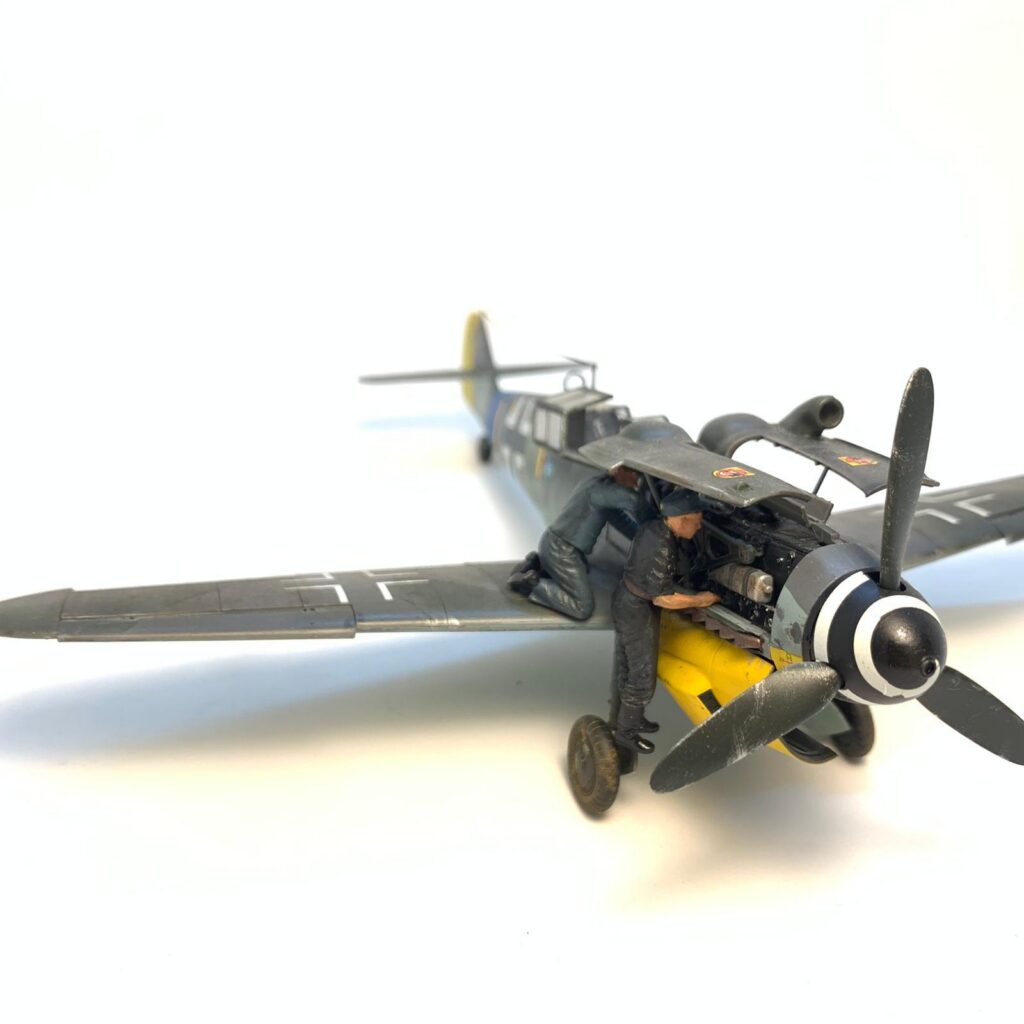
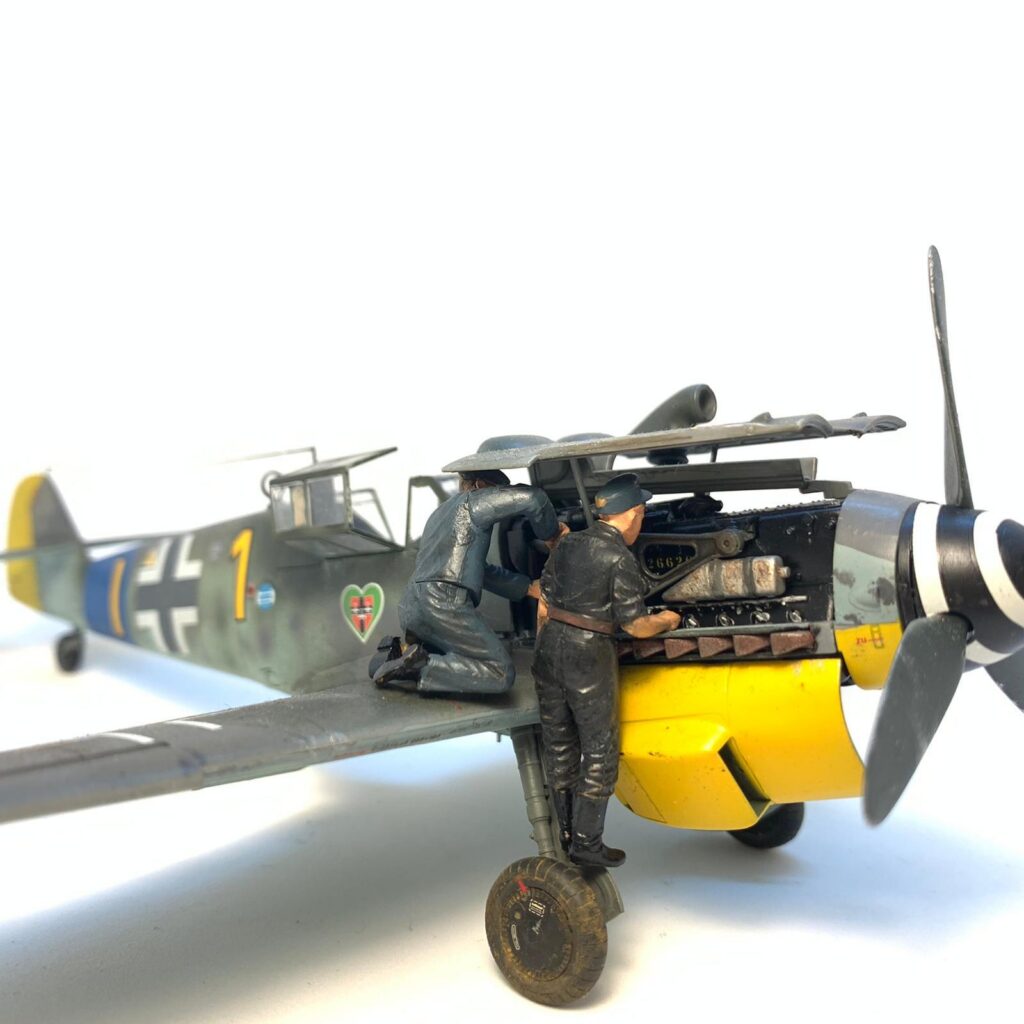
The build was completed around October–November 2019; the exact day is not recorded.
The two maintenance figures bring movement to the exposed-engine display. Alongside the removable cowlings and Yellow 1 markings, they turn the finished model into a small maintenance scene rather than simply a static aircraft silhouette.
Related ModofWar features
- Bf 109 G-6 — historical dossier
- Wilhelm Schilling — historical portrait.
- Final Checks — a Schilling-themed diorama. A separate modelling project; its figures and vehicles were not part of this aircraft build.

Leave a Reply