A French fighter in the Turkish War of Independence
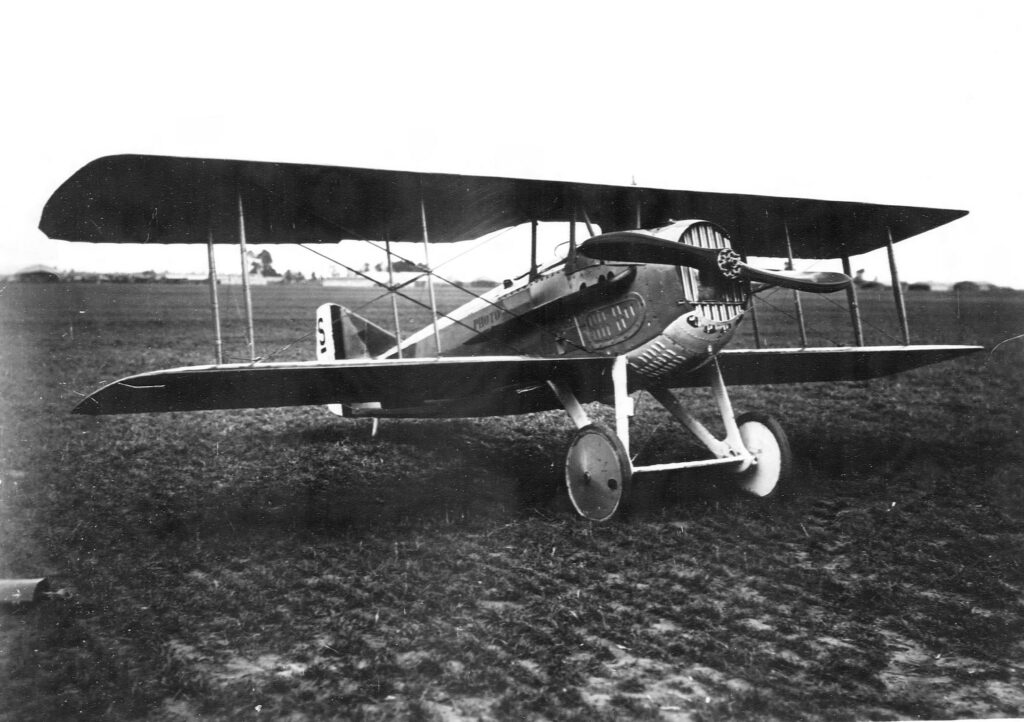
The SPAD XIII C.1 was a single-seat French fighter developed during the final years of the First World War. Its importance to Turkish aviation emerged in an entirely different conflict. By the summer of 1922, Turkish forces preparing for the Great Offensive needed more than reconnaissance aircraft: they also needed fighters capable of preventing Greek aircraft from observing the concentration and movement of troops. A group of SPAD XIIIs acquired through Italian intermediaries was consequently brought to Anatolia, assembled and prepared for use under severe logistical constraints. [1][2][3]
The Turkish story of the SPAD XIII is therefore not simply a catalogue of speed and armament. It is about how a small, improvised air arm tried to deny its opponent aerial reconnaissance at a decisive moment of a land campaign. [1][2]
From the SPAD VII to the more powerful XIII
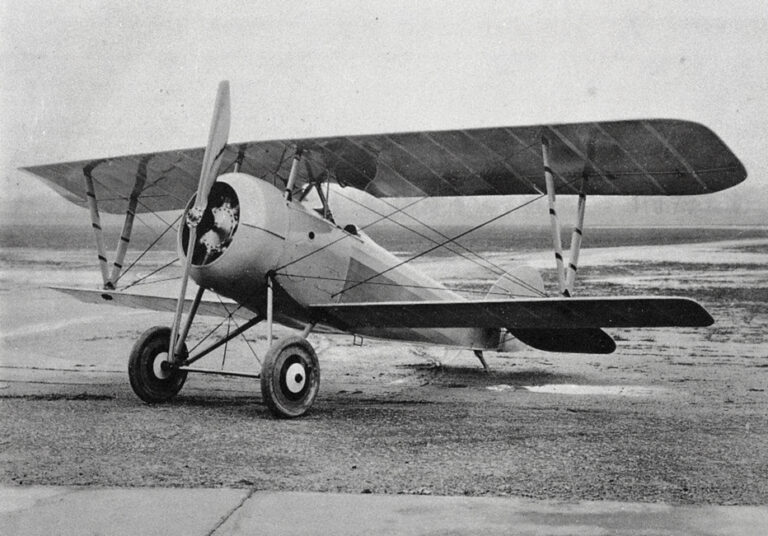
Developed from the earlier SPAD VII, the XIII entered service in 1917 with a more powerful engine and a standard arrangement of two synchronized machine guns. Its fabric-covered wooden structure was robust enough to withstand high-speed dives, while the more powerful Hispano-Suiza engine increased its potential as a frontline fighter. The type served in large numbers with French and American squadrons during the First World War. [4][5][6]
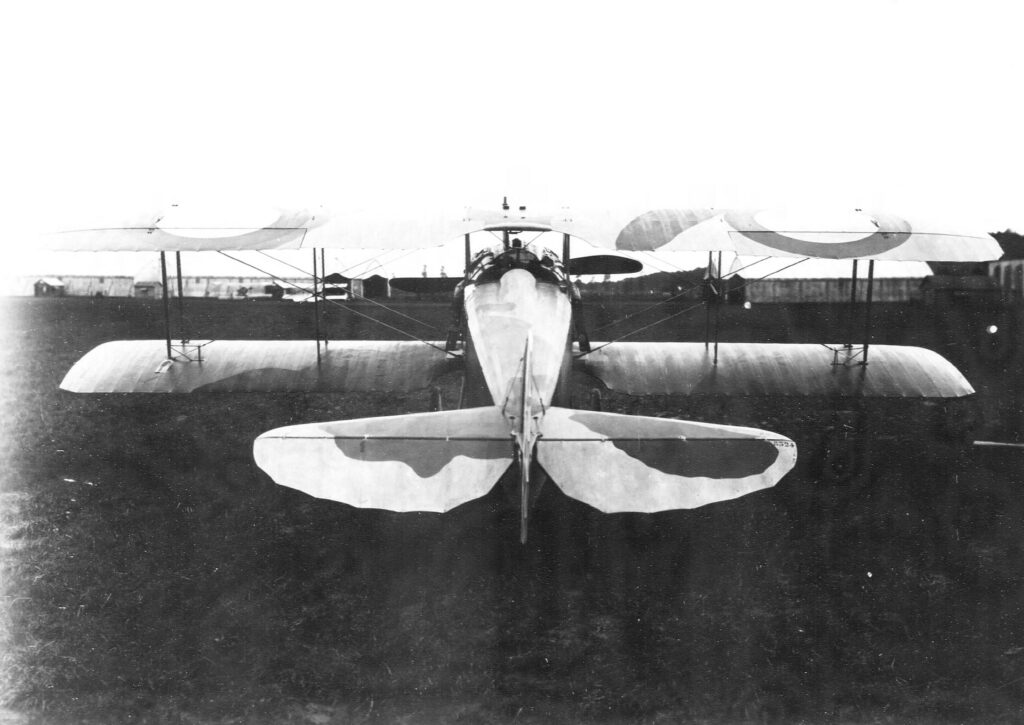
Preserved examples illustrate the familiar 220-horsepower Hispano-Suiza 8Be and twin-machine-gun configuration. That standard specification must not, however, be transferred uncritically to aircraft delivered to Turkey. Sources describe machines arriving without armament and local efforts to fit available guns; the precise weapons fitted to every individual Turkish aircraft cannot be assumed. [3][4][5][7]
Twenty aircraft accepted: a document from August 1922
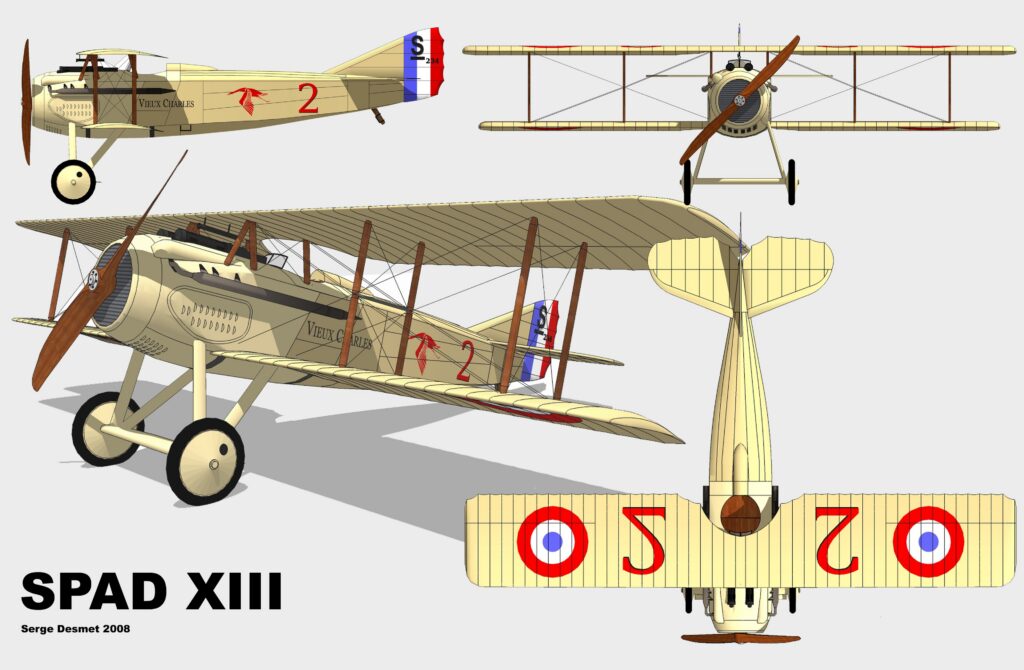
Turkish authorities sought new fighters as the Great Offensive approached. The Ministry of National Defence’s historical account describes the purchase of approximately twenty SPAD XIII aircraft from an Italian arms dealer. Crucially, a contemporaneous military memorandum dated 1 August 1922 reports that the acceptance of 20 SPAD XIIIs brought by Monsieur Parakin had been completed. The memorandum records a speed of 205 km/h, endurance of two hours, wingspan of 8.25 m, length of 6.2 m and height of 2.3 m. These are contemporary Turkish assessments of the aircraft group, not values copied from a modern museum exhibit. [1][2]
Other accounts refer to 21 purchased aircraft, or 23 aircraft in inventory when a different acquisition scope is counted. Such figures should not be made interchangeable. The best-attested statement for this Dossier is that the 1 August 1922 document confirms acceptance of twenty machines. [2][7]
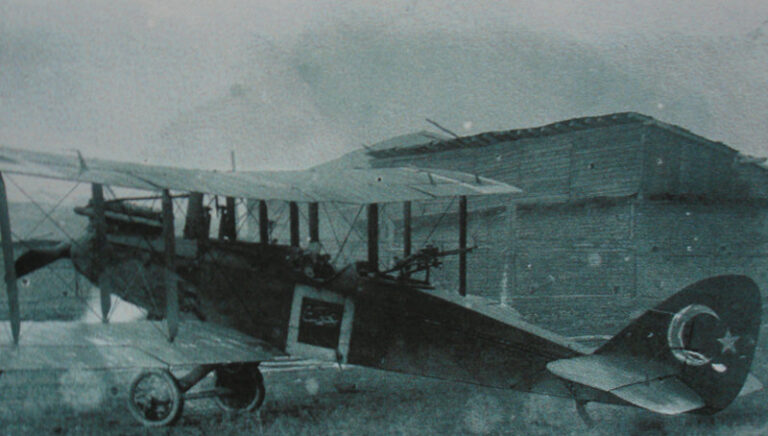
The aircraft reached the country through the Mersin–Konya supply route. At Konya, mechanics worked to assemble and prepare them with scarce tools, spares and pilots. Secondary Turkish aviation histories explain that weapons taken from German aircraft were fitted to examples delivered unarmed, creating synchronization challenges. While the general purpose of this work is clear, it does not establish an identical armament fit on all Turkish SPADs. [3][7]
A planned fighter screen over the front
The August memorandum is especially revealing because it goes beyond procurement. It proposes distributing SPAD fighters near Sandıklı, Çobanlar and Aziziye, creating a defensive screen against Greek aircraft approaching or crossing Turkish lines. The purpose was to challenge aerial reconnaissance over assembly areas and routes used in preparations for the offensive. These small detachments required only modest numbers of pilots, mechanics, trainees and enlisted personnel—but they also depended on aircraft that could be kept serviceable near the front. [2]
In other words, the SPADs were not merely intended for isolated duels: they formed part of a plan to support the land campaign. A 2022 study published by the Atatürk Research Centre reports that by 20 August 1922, the frontline aircraft company had moved to the Çay area and was flying offensive patrols with four fighters recently received from Konya. That was a small force, but one placed at a particularly sensitive stage of the campaign. [3]
The air war of 26 August
On 26 August 1922, the opening day of the Great Offensive, the SPAD XIII figured prominently in the Turkish fighter effort. According to the Ministry of National Defence, Captain Fazıl used one of these aircraft to hit a Greek aeroplane and force it to land. The document does not justify inventing a precise combat location, enemy variant or additional dramatic details for this single encounter. [1]
A report by the Air Forces Inspector, subsequently summarized by the Ministry, assessed that SPAD fighters helped establish air superiority on 25–26 August. Greek reconnaissance sorties were disrupted, while Turkish reconnaissance could operate more effectively and the preparations for the assault remained better concealed. This was a tactical and operational assessment of the air effort, not a claim that a single dogfight decided the battle. [1]
The SPAD XIII should be understood as one component of the larger operation. Its ability to intercept or discourage enemy observation mattered alongside the reconnaissance aircraft, mechanics, airfields and ground formations that made the offensive possible. A Turkish academic study also reproduces a period photograph of personnel beside a SPAD at the Konya aircraft station in 1922. [3]
Beyond the war: fighter training
The type did not disappear from Turkish service as soon as the fighting ended. The Ministry of National Defence confirms continued use for fighter and fighter-training duties in the post-war years. This connects the wartime acquisition to aviation training during the early Turkish Republic. [1]
A secondary Turkish aviation reference gives 1926 as the retirement year, while some historical inventory compilations provide a later date. Without a reconciled aircraft-by-aircraft inventory or retirement document, this Dossier does not present 1926 as an absolutely established final flight. [7]
Its place in the archive
The SPAD XIII links several aspects of Turkish military aviation history: the procurement of foreign aircraft, improvised assembly and rearmament, tactical fighter deployment ahead of the Great Offensive and post-war pilot training. It deserves a single historical Dossier spanning the War of Independence and the early Republic, rather than duplicate entries for the same type in two periods. [1][2][3]